Seimei is not an old cultivar with decades of established commercial reputation. It is a relatively new cultivar created specifically to perform well under shading and to produce high-quality matcha, powdered tea, kabusecha and sencha.
Official trials are highly encouraging: strong yield under shading, vivid green powder, strong umami and less astringency than conventional standards. Sanrokuen's real-world assessment is also positive, but more cautious. We have seen excellent color, clean flavor and promising matcha aroma, while some young commercial samples showed less depth and lower component-evaluation scores than expected.
For the wider tea-science context behind this difference, see Why Is Green Tea Astringent?, which explains how cultivar, catechins, shading and harvest conditions affect astringency.
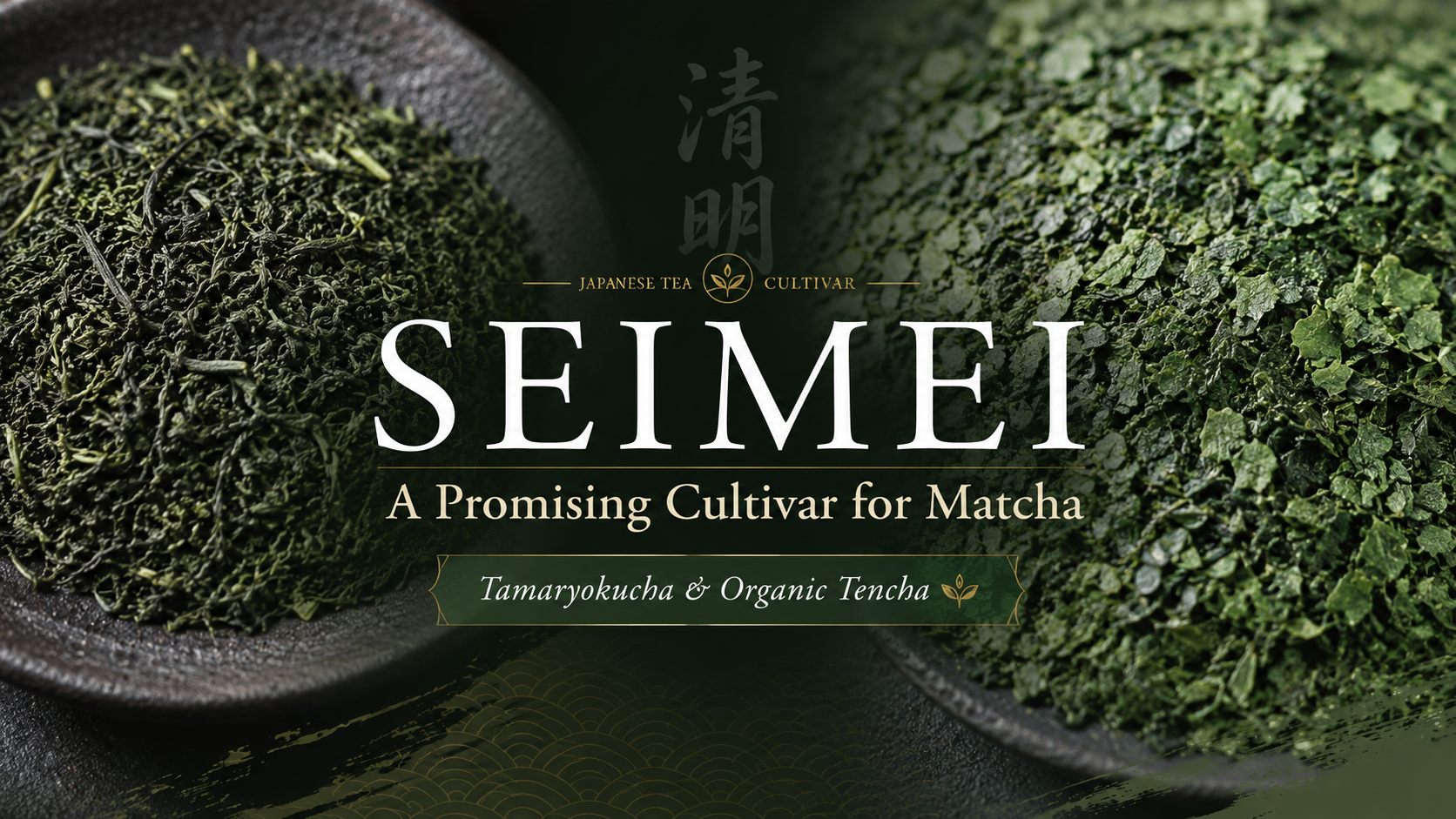
Sanrokuen's practical view of Seimei
The honest evaluation is not that Seimei has already proved everything. It is that the cultivar shows enough color, aroma, balance and production potential to justify continued attention.
Sanrokuen has examined covered Seimei as deep-steamed green tea, tencha and matcha. The impression changes depending on how the leaf is processed.
As covered deep-steamed green tea, many samples had excellent liquor color and very little unpleasant cultivar character. They were clean and easy to drink. However, in some samples, we felt that the umami lacked layers and the finish ended sooner than expected.
When processed into tencha, our evaluation became more positive. The color was attractive, the balance of umami, bitterness and astringency was well controlled, and the aroma after milling felt suitable for genuine matcha rather than merely green powdered tea.
In component testing, some Seimei samples scored lower than other cultivars examined at the same time. This initially appeared inconsistent with the public description of strong umami and low astringency.
We do not yet know whether the difference was caused by young tree age, field conditions, fertilization, shading, harvest timing, processing or simply the limited number of samples. Several Kumamoto fields planted with Seimei are still relatively young.
This uncertainty does not reduce our interest. It explains why we consider Seimei one of the most important cultivars to follow over the next several years.
Our current conclusion: Seimei already performs well in color, ease of drinking and tencha balance. Its full depth and analytical potential in Kumamoto may become clearer as fields mature and producers accumulate more experience.
Advantages of Seimei when made into matcha
1. Developed specifically for shaded tea
- Seimei was bred with matcha, powdered tea and kabusecha in mind.
- Official trials found higher shaded yield and quality than Yabukita and Saemidori under the tested conditions.
- Useful when producers need quality and practical production capacity together.
2. Strong visual potential
- New shoots are vivid green and uniform.
- Powdered tea was greener than Yabukita in official comparison.
- Sanrokuen has also seen attractive color in tencha and matcha samples.
3. Clean and balanced sensory profile
- Low levels of objectionable aroma or rough astringency in suitable samples.
- Easy to introduce to buyers and consumers without specialist cultivar knowledge.
- Good base for drinking matcha and premium blends.
4. Wider cultivation potential than Saemidori
- Official material describes better cold tolerance than Saemidori.
- It can be grown in major tea regions from Kanto southward where Yabukita is suitable.
- Wider cultivation may support future supply growth.
5. Relevant to organic matcha projects
- Resistance to ring spot is rated strong, with generally better major-disease resistance than Yabukita.
- Disease resistance can support lower-input production planning, although it does not eliminate field-management needs.
- Sanrokuen currently has organic Seimei matcha available for wholesale discussion.
6. Strong future-facing product story
- A modern cultivar developed in response to matcha and powdered-tea demand.
- Useful for brands that want more than traditional origin storytelling.
- Can communicate innovation, cultivar selection and future Japanese tea production.
Limitations and open questions for matcha buyers
Commercial experience is still limited
Seimei was registered in 2020, and many commercial fields are younger than long-established Yabukita or Saemidori fields. Buyers should expect greater uncertainty in long-term flavor consistency, field maturity and future supply.
Some young-tree samples lacked depth
In some covered deep-steamed Seimei we examined, the first impression was clean and attractive, but the umami and aftertaste did not have the depth found in stronger mature-tree samples of other cultivars.
Our component results were not always strong
Some Seimei lots produced lower AF-related evaluation scores than other cultivars tested in the same period. We do not interpret this as proof that Seimei is chemically weak. It is evidence that official cultivar potential and real commercial lots should not be treated as identical.
Official trials used mature, controlled fields
The often-cited NARO shaded trial used 10-year-old tea plants in the same field, with 85% shading for 15 days before the first harvest. Commercial lots may differ in tree age, shade material, duration, nutrition, weather and processing.
Clean flavor can become neutral flavor
Seimei's low-objection profile is useful, but a weak lot may taste merely clean rather than memorable. Buyers should assess aroma, finish and mouthfeel—not color alone.
The cultivar name is not yet widely recognized overseas
Seimei can create a valuable innovation story, but the product page or packaging must explain why the cultivar matters. The name alone will not sell the product in the way that Uji, Saemidori or Okumidori may already attract specialist attention.
Why Seimei can look better as tencha than as sencha
Covered deep-steamed sencha and tencha are made through different processes. Deep steaming breaks the leaf structure and emphasizes liquor color and rapid extraction. Tencha is steamed and dried without rolling, then refined and milled for matcha.
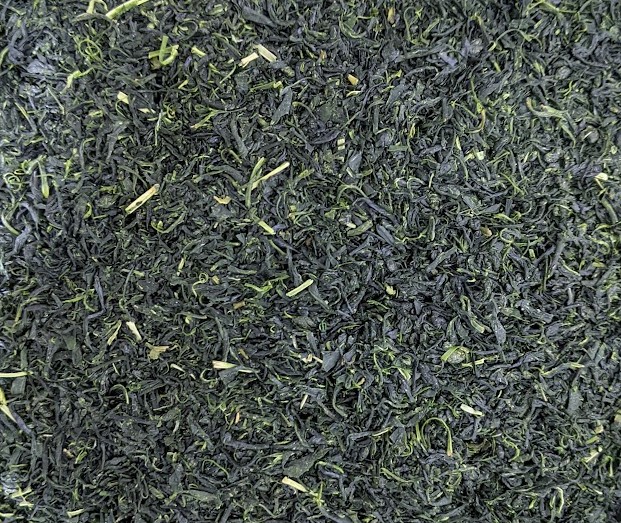
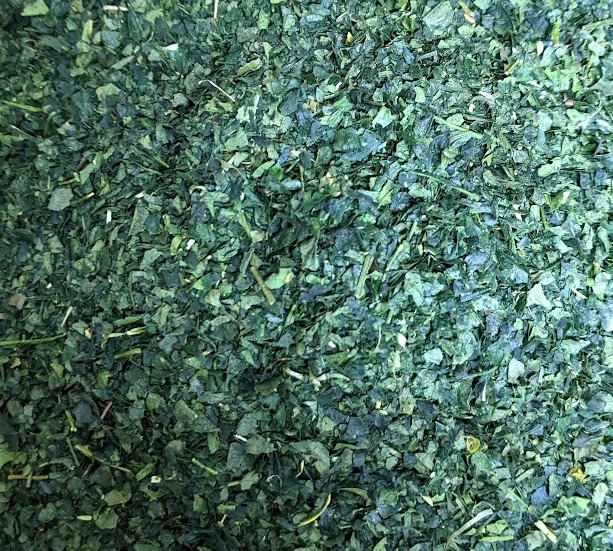
These two images help explain why Seimei may be evaluated differently as sencha-style tea and as tencha for matcha. The same cultivar can present a more neutral, easy-drinking profile in finished green tea while showing stronger promise in tencha and milled matcha.
In covered deep-steamed Seimei, the vivid liquor and easy drinkability were clear strengths. However, the clean profile could expose a lack of depth in younger material.
In tencha, the cultivar's strengths appeared more integrated. Color, aroma and the balance of umami, bitterness and astringency worked together more effectively. After milling, the aroma felt recognizably matcha-like rather than simply vegetal or green.
This distinction matters to buyers. A cultivar that produces attractive sencha does not automatically make excellent matcha, and a sencha tasting alone is not sufficient to evaluate tencha potential.
Practical lesson: evaluate Seimei in the form you intend to buy. For a matcha project, taste the finished matcha and review the tencha—not only a sencha sample from the same cultivar.
How to interpret Seimei's component results
Sanrokuen evaluates matcha material using sensory assessment and, when appropriate, analysis of total nitrogen, free amino acids, theanine, fiber, tannin, caffeine and related quality indicators.
Public research describes Seimei as strong in umami and relatively low in astringency. In the mature NARO comparison field, Seimei received a high taste score under shading.
Our commercial samples have not always reproduced that advantage in analytical scores. Several explanations remain possible:
- Tree age: young fields may not yet express the same depth or balance as mature 10-year-old plants.
- Shading: duration and shade percentage can change color, amino acids, astringency and plant stress.
- Harvest timing: a few days can change leaf maturity and fiber levels.
- Nutrition and field conditions: fertilizer, soil, altitude and weather affect the result.
- Processing: sencha, tencha and milling conditions reveal different characteristics.
- Sample size: a small number of lots cannot define an entire cultivar.
The correct conclusion is not that the official research is wrong or that our samples are wrong. They describe different fields and conditions.
For buyers, the lesson is straightforward: component data are useful, but the current lot must be evaluated in context. A lower score does not erase good color, aroma and balance, while a high score does not guarantee a complete matcha.
See our Kumamoto Matcha Component Analysis for more information about how Sanrokuen uses analytical data.
Which applications suit Seimei matcha?
| Application | Suitability | Why it may work | Buyer caution |
|---|---|---|---|
| Traditional usucha | High for selected lots | Clean aroma, balanced bitterness and astringency, good color and genuine matcha character. | Confirm depth and finish; younger lots may be clean without being complex. |
| Premium everyday matcha | High | Easy to drink, visually attractive and suitable for a broad audience. | The price should reflect the actual lot, not novelty alone. |
| Organic ceremonial matcha | High for selected certified lots | Modern cultivar story, useful color and disease-resistance characteristics support organic product development. | Organic certification does not guarantee superior sensory quality; taste the current sample. |
| Premium matcha blend | Very high | Can provide color, clean balance and matcha aroma while another cultivar adds deeper umami or stronger body. | Blend ratios and actual application should be tested by lot. |
| Matcha latte | Medium to high | Good color and balanced flavor suit premium lattes with moderate milk and sweetness. | For very heavy milk drinks, a stronger cultivar such as Sayamakaori or a more forceful blend may be preferable. |
| Single-cultivar innovation line | High | Provides a clear story about modern Japanese breeding for shaded tea and matcha. | Buyers must explain the cultivar because international recognition remains limited. |
| Desserts and baking | Medium | Color and clean flavor work well in refined sweets and premium applications. | A high-grade Seimei may be unnecessary for strongly flavored or high-heat products. |
Seimei compared with other matcha cultivars
| Cultivar | Main strength | Possible advantage over Seimei | Possible Seimei advantage |
|---|---|---|---|
| Saemidori | Vivid color, soft umami, established premium reputation | More immediately recognizable sweetness and market value | Wider cultivation range, strong shaded yield and a newer matcha-focused story |
| Tsuyuhikari | Clean flavor, umami and strong component potential | Sanrokuen has seen more consistently strong component results in selected lots | Seimei may offer a stronger future story in tencha, organic production and broader planting |
| Yabukita | Traditional Japanese-tea character and blending backbone | Greater historical recognition and classic tea flavor | Brighter powder, lower astringency potential and better shaded-production characteristics |
| Sayamakaori | Powerful flavor and latte strength | More likely to remain noticeable in heavy milk | Cleaner profile, smoother drinking and easier broad-market use |
| Yutakamidori | Established Kagoshima supply, fukamushi heritage and cost performance | Lower cost, mature commercial supply and useful body for everyday matcha | Brighter color potential, stronger long-shading suitability and a more matcha-focused breeding story |
This comparison reflects broad tendencies and Sanrokuen's experience. It does not replace evaluation of the current lot.
How an overseas buyer should evaluate a Seimei lot
- Ask about tree age. A young commercial field may not match the depth of mature official trial plants.
- Confirm true tencha-based matcha. Powdered sencha and tencha matcha should not be treated as the same product.
- Review harvest and shading. Ask for harvest season, shade duration and relevant production details available for the lot.
- Taste for finish, not only color. Seimei can be visually impressive; make sure the flavor continues after swallowing.
- Review component analysis when needed. Use it to understand the lot, not to certify the entire cultivar.
- Compare conventional and organic lots separately. They may differ in field management, flavor, color, supply and price.
- Test the final use. Prepare usucha, latte or food using the buyer's actual dosage and recipe.
- Confirm future supply. New plantings may increase supply, but young fields and lot reservations can limit immediate quantity.
Conventional and organic Seimei matcha are currently available for wholesale inquiry.
Sanrokuen currently lists first-harvest Kumamoto Seimei ceremonial-grade matcha made from tencha and organic Seimei ceremonial-grade matcha among the lots available for business discussion. Our named organic Seimei product is Hirakawa no Mukashi — Organic Kumamoto Matcha. Final suitability and price depend on the current lot, quantity, packaging, destination and required documents.
What kind of cultivar is Seimei?
Seimei is a slightly early green-tea cultivar bred by Japan's National Agriculture and Food Research Organization, NARO. It was created by crossing Fushun, known for vigorous growth, yield and cold tolerance, with Saemidori, known for early growth and high tea quality.
At the NARO breeding site in Makurazaki, Seimei budded about five days and was harvested about four days earlier than Yabukita. In colder regions, the timing may be similar to or slightly later than Yabukita.
NARO reports resistance ratings of medium for anthracnose, strong for ring spot, medium for bacterial shoot blight and moderately strong for blister blight, with insect occurrence similar to other green-tea cultivars.
The official results explain why producers are planting Seimei. Sanrokuen's ongoing work asks the next question: how will the cultivar perform across real Kumamoto fields as the trees mature and producers refine shading and tencha processing?
Frequently asked questions
Is Seimei suitable for matcha?
Yes. It was developed specifically for shaded tea, matcha and powdered tea. Official trials and Sanrokuen's tencha observations both show strong potential in color, balance and matcha aroma.
Why did some Sanrokuen samples have lower component scores?
The cause is not yet clear. Possible factors include young tree age, field conditions, shading, fertilization, harvest timing, processing and limited sample numbers. We therefore avoid treating a small number of commercial lots as the final verdict on the cultivar.
Is Seimei better than Saemidori?
Not universally. Saemidori has a strong reputation for vivid color and soft umami. Seimei offers good color, strong shaded yield, wider cultivation potential and a new matcha-focused production story. The better choice depends on the actual lot and intended product.
Is Seimei good for matcha latte?
It can work well in premium lattes with moderate milk and sweetness. For very heavy milk recipes, compare it with a stronger cultivar or blend.
Is organic Seimei available?
Sanrokuen currently lists organic Seimei ceremonial-grade matcha made from tencha for wholesale inquiry. Availability depends on the current lot and quantity.
Sources and editorial basis
- NARO: Official cultivar profile for Seimei.
- NARO: Seimei, a green-tea cultivar suitable for matcha and powdered tea.
- NARO: High-quality green-tea cultivar Seimei suitable for shaded cultivation.
- MAFF Plant Variety Database: Seimei, registration No. 27874.
- Sanrokuen Japanese article: Seimei evaluated as deep-steamed tea, tencha and matcha.
- Sanrokuen: Japanese Matcha Cultivars Guide.
- Sanrokuen: Kumamoto Matcha Component Analysis.
The sections identified as Sanrokuen's view are based on the shaded tea, tencha, matcha and analytical results we have handled. They do not represent every Seimei field or finished product. Producer identities, exact scores, purchase prices, shading formulas, blend ratios and proprietary sourcing criteria are not disclosed.