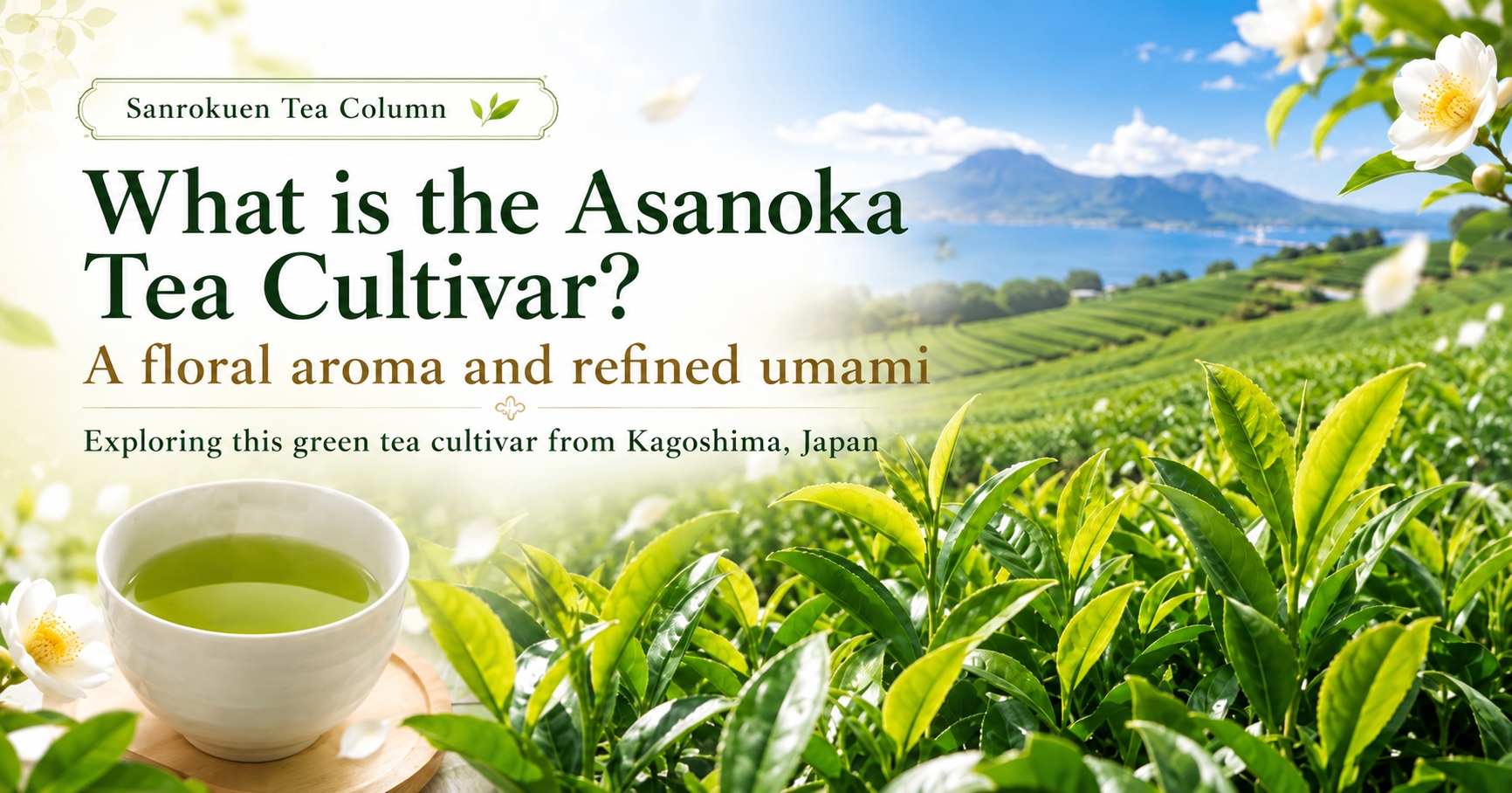
Asanoka should be evaluated differently from cultivars already proven for tencha and matcha. Its official registration describes it as a high-quality sencha cultivar. That does not mean it cannot make good matcha. It means buyers should separate potential from proven matcha suitability.
Sanrokuen's evaluated lots have shown a soft floral, sometimes sweet-fruit-like aromatic impression.
More elegant than aggressively rich in the lots we have handled, with astringency varying by crop and processing.
Shading, tencha processing, color and post-milling aroma must be checked in the actual lot.
Uncommon nationally, but grown on a meaningful commercial scale rather than only as a trial cultivar.
Good establishment, rooting and yield help explain why the cultivar has persisted in Kagoshima.
Resistance to some diseases does not make Asanoka universally easy to grow, especially under organic management.
Sanrokuen's practical view of Asanoka
Among the Asanoka teas Sanrokuen has evaluated, the most memorable characteristic has not been brute-force umami. It has been the combination of a sweet, flower-like aroma, a gentle cultivar-specific umami and an elegant finish. Well-made leaf tea can feel refined without becoming thin or anonymous.
That makes Asanoka interesting from a matcha-development perspective. Many matcha projects concentrate almost entirely on green color and amino-acid-driven umami. Those qualities matter, but a cultivar with a recognizable aroma can create another type of differentiation: a matcha that has a clear sensory identity even before a buyer talks about origin or price.
Why Asanoka is interesting to us: if its floral aroma survives shading, tencha manufacture and milling, it could offer a different premium story from Saemidori's vivid color, Seimei's modern shaded-tea performance or Yabukita's classic Japanese-tea character.
However, this is exactly where caution is needed. Kagoshima information indicates that covering Asanoka can suppress some of its cultivar-specific aroma. Therefore, the cultivation method that improves matcha-like umami and color may also reduce the trait that makes Asanoka distinctive. That tension is central to evaluating the cultivar for matcha.
Potential advantages of Asanoka when developed for matcha
1. A floral aromatic direction that can differentiate a single-cultivar matcha
Sanrokuen has experienced Asanoka as having a soft floral and sweet-fruit-like aroma rather than only the grassy or marine notes often discussed in Japanese green tea. If retained through shaded cultivation and tencha processing, this could be commercially useful in premium single-cultivar products.
2. Umami without requiring an extremely heavy taste
Official Kagoshima material describes Asanoka as rich in both amino acids and catechins, while Sanrokuen's sensory experience with finished tea has often emphasized gentler, more elegant umami. The difference is important: harvest timing, shading, steaming, firing and extraction can change how the same cultivar expresses itself.
3. Some astringency may provide useful structure
For matcha, astringency is not always a defect. A moderate amount can give shape to the finish and help a tea remain noticeable in milk. The question is whether the current lot balances that structure with sweetness, aroma and enough umami.
4. A larger production base than many niche cultivars
Asanoka represented about 347 hectares nationally in 2023 according to data summarized in Sanrokuen's Japanese cultivar article, and cultivation is concentrated strongly in Kagoshima. This does not make matcha-grade Asanoka abundant, but the cultivar is not confined to a few experimental fields.
5. Agronomic traits may support future supply
Strong vigor, good rooting, relatively high yield and useful resistance to anthracnose and gray blight can make a cultivar more realistic for farmers than a high-quality cultivar with difficult field performance. This matters if buyers eventually want repeat commercial supply rather than a one-time rare lot.
Limitations and risks for matcha buyers
- It was registered as a sencha cultivar. Asanoka does not have the same established matcha track record as cultivars developed or widely used for shaded tencha.
- Shading can reduce the distinctive aroma. More covering may improve umami and green color while weakening the floral identity.
- Color should not be assumed from the cultivar name. Buyers should compare actual powder color under the same lighting and dosage.
- Astringency can become prominent. Later harvest, stronger leaf maturity, processing or preparation may shift the balance away from elegance.
- Net blister blight is a serious cultivation weakness. Organic or low-input production still requires field-specific disease management.
- The cultivar name is not a quality guarantee. The field, shading, harvest, tencha process, firing, milling and storage can matter as much as genetics.
The key question for Asanoka matcha: how much shading is too much?
Matcha production normally uses shading because reduced sunlight can increase the sensory prominence of amino-acid-derived umami, reduce some astringent expression and improve leaf color. For Asanoka, however, shading introduces a design problem: the same practice that makes the leaf more matcha-like may reduce the cultivar aroma.
| Product objective | Possible shading direction | What to verify |
|---|---|---|
| Preserve floral cultivar aroma | Avoid automatically maximizing shade intensity or duration. | Dry-leaf aroma, tencha aroma and aroma after milling. |
| Increase umami and green color | Use meaningful shading, but evaluate whether aromatic identity is being lost. | Powder color, free-amino-acid profile, bitterness, aroma and finish. |
| Create balanced premium matcha | Optimize rather than maximize shading. | Side-by-side trials from the same field or comparable lots are ideal. |
| Latte-oriented matcha | Enough shading for color and body, without making the aroma too delicate. | Test the actual milk ratio and sugar level. |
Sanrokuen's view: with Asanoka, the best matcha may not be the lot with the strongest shading. The better product could be the lot that preserves enough cultivar aroma while still achieving the color, umami and smoothness expected from matcha.
Which matcha applications may suit Asanoka?
| Application | Potential | Why it may work | Buyer caution |
|---|---|---|---|
| Single-cultivar usucha | Potentially high | Floral aroma and refined umami could create a distinctive premium identity. | Only after confirming actual tencha quality, color, texture and finish. |
| Premium retail matcha | High if the lot is expressive | Uncommon cultivar, clear lineage and aromatic differentiation create a strong story. | The product must justify the story sensorially; rarity alone is not enough. |
| Premium matcha latte | Medium to high | Some astringency may provide structure while floral aroma adds complexity. | Heavy milk and sweetness may hide the aroma. |
| Blend component | High potential | Could contribute aroma while Saemidori, Seimei or another cultivar contributes color or depth. | The contribution should remain large enough to be meaningful. |
| Large sweet café latte | Medium | Possible if the current lot has sufficient body and astringency. | A stronger, cheaper cultivar or blend may be more efficient. |
| Industrial baking | Low to medium | Technically usable. | Heat and competing ingredients can remove the aromatic reason to choose Asanoka. |
Asanoka compared with other matcha cultivars
| Cultivar | Main matcha strength | Possible advantage over Asanoka | Possible Asanoka advantage |
|---|---|---|---|
| Saemidori | Vivid color, refined umami, established premium recognition | Much stronger premium matcha track record and color reliability | More unusual floral aromatic identity |
| Seimei | Modern shaded-tea and matcha suitability, yield, clean balance | Officially proven for covered tea and matcha-oriented production | More distinctive lineage and potentially more floral personality |
| Yabukita | Classic Japanese tea character and blending versatility | Familiar benchmark, easier buyer understanding | More unusual sweet floral cultivar aroma |
| Yutakamidori | Body, value and large Kagoshima production base | Potentially easier commercial scale and stronger value positioning | More refined aromatic positioning |
These are broad practical tendencies, not guarantees. Matcha buyers should compare the actual harvest, shading, tencha process, sample and final recipe.
Why Asanoka has remained commercially relevant in Kagoshima
Asanoka is not only an aroma-focused cultivar. Its production traits help explain why it has maintained and gradually expanded a meaningful cultivation base in Kagoshima.
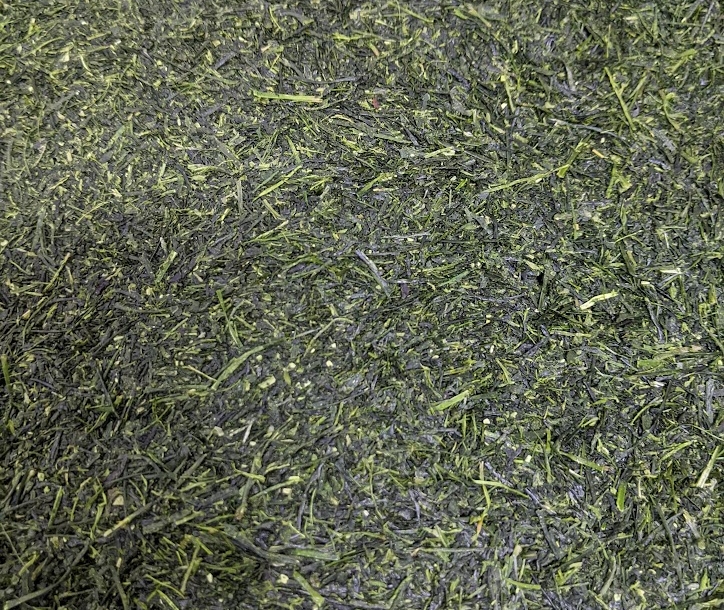
- Strong vigor: good early growth and establishment can help farmers develop productive fields.
- Good rooting: official descriptions note useful propagation and establishment characteristics.
- Relatively high yield: it has been described as yielding more than Yabukita across harvests.
- Slightly early harvest: in Kagoshima it is generally harvested about two days before Yabukita, helping spread factory workload.
- Useful cold tolerance: another positive trait for field stability.
- Resistance to anthracnose and gray blight: useful for reduced-input and organic-oriented management.
Organic cultivation: promising, but not simple
Asanoka has been studied as a useful cultivar for organic cultivation because some important disease and pest pressures may cause less damage than in Yabukita. That can reduce one source of risk where chemical-control options are restricted.
However, Asanoka is highly susceptible to net blister blight. In an organic system, this weakness can become especially important because disease control options are more limited. Pruning, harvest timing, autumn shoot hardening and permitted control materials therefore remain part of the production strategy.
Buyer implication: “suitable for organic cultivation” should not be interpreted as “easy to grow organically.” Asanoka has useful resistance traits, but field location and net blister blight management still matter.
What kind of cultivar is Asanoka?
| Cultivar | Asanoka |
|---|---|
| Breeding origin | Kagoshima Prefecture, Japan |
| Parentage | Yabukita × Hirasui No. 1, a Chinese tea line |
| Japanese variety registration | March 19, 1996 |
| Registration number | 5013 |
| Harvest timing | Slightly early; about two days earlier than Yabukita in Kagoshima as a practical guide |
| Original official role | High-quality sencha cultivar |
| National area | About 347 ha in 2023, according to figures summarized in Sanrokuen's Japanese article |
| Kagoshima area | About 299 ha in 2025, showing that production is strongly concentrated in Kagoshima |
The cross is particularly interesting because it combines Japan's dominant benchmark cultivar, Yabukita, with a Chinese tea line. It would be too simplistic to say that the floral aroma comes directly from one parent, but the cross gives Asanoka a different genetic background from many cultivars derived only from common Japanese lines.
The Japanese variety registration describes Asanoka as slightly early, cold-tolerant, relatively high-yielding and suitable for good-quality sencha. Its modern matcha potential should therefore be treated as a separate question that requires shaded-production and tencha evaluation.
Frequently asked questions
Is Asanoka good for matcha?
It has interesting potential, especially for buyers seeking cultivar aroma, but it was registered as a sencha cultivar rather than a dedicated matcha cultivar. Shading, tencha processing, powder color, aroma and taste should be evaluated in the actual lot.
What does Asanoka matcha taste like?
A good Asanoka lot may show gentle umami, some structured astringency and a floral or sweet-fruit-like aroma. The exact balance can change substantially with shading, harvest timing and processing.
Why is shading especially important for Asanoka?
Shading may improve umami and color but can also suppress Asanoka's distinctive cultivar aroma. For this cultivar, the best matcha strategy may require balancing rather than maximizing shading.
Is Asanoka a rare cultivar?
It is uncommon nationally compared with Yabukita, but it is not an ultra-rare experimental cultivar. National area was about 347 hectares in 2023, with most cultivation concentrated in Kagoshima.
Is Asanoka suitable for organic tea production?
It has useful disease-resistance and vigor traits and has been studied for organic cultivation. However, it is very susceptible to net blister blight, so organic field management still requires careful planning.
Can an overseas buyer request Asanoka matcha from Sanrokuen?
Asanoka is not presented here as a guaranteed standard-stock matcha grade. Buyers interested in cultivar-specific sourcing or development can contact Sanrokuen with the intended use, quantity, destination and target specification.
Interested in cultivar-specific Japanese matcha?
Use cultivar information to shortlist candidates, then confirm the actual current lot, harvest, shading, powder color, taste, application and supply conditions. For a new cultivar such as Asanoka in matcha use, sample evaluation is especially important.
Sources and editorial basis
- Sanrokuen Japanese article: Asanoka cultivar, sensory evaluation, cultivation area, organic suitability and production characteristics.
- MAFF Plant Variety Database: Asanoka, registration No. 5013.
- Kagoshima Prefecture: Main Varieties of Kagoshima Tea.
- Kagoshima Prefecture: Tea Industry Promotion Data.
- Sanrokuen: Japanese Matcha Cultivars Guide.
Sensory descriptions identified as Sanrokuen's view are based on Asanoka teas handled or evaluated by Sanrokuen. They should not be treated as universal specifications for every Asanoka field or finished product. Matcha-specific sections distinguish established public information from Sanrokuen's practical interpretation of how the cultivar may behave under shaded and tencha-based production.
Images: the English feature image is stored at /en/assets/images/cultivars-kagoshima-asanoka.jpg. The Kagoshima Asanoka image in the cultivation section is reused from Sanrokuen's Japanese article.
Buyer path
All matcha cultivars → · Compare Yabukita → · Compare Saemidori → · Compare Seimei → · Compare Yutakamidori → · Component analysis → · Current wholesale availability → · Sample or quotation inquiry →