Japanese tea cultivars
Okumidori Tea: Sencha, Matcha, and a Tea Merchant’s Perspective
Okumidori is a Japanese tea cultivar used for both sencha and matcha. It is well regarded among tea merchants and is one of the familiar names among Japan’s late-budding tea cultivars.
At Sanrokuen, my experience with Okumidori comes from both buying tea and taking part in the production of tea destined for matcha. I value its potential, particularly the attractive green color it can produce as matcha. I have also encountered batches with a harsh taste that deserves attention.
Here, I share how I see Okumidori as a tea merchant: its place in the market, the differences between sencha and matcha, and what a rain-delayed harvest taught me.
What Is Okumidori?
Okumidori is a cultivar—a particular variety of the tea plant. The name identifies the plant, rather than a region, a quality grade, or a finished style of tea.
It is classified as a late-budding cultivar, with a harvest period that comes relatively late in the season. Kyoto Prefecture’s cultivar guide also identifies Okumidori as a late cultivar suitable for sencha. [1]
“Late-budding” does not mean that the leaves have been left unpicked for too long. It describes the cultivar’s natural growth schedule. Like other cultivars, Okumidori has an appropriate harvesting window.
Okumidori can be made into sencha, the loose-leaf green tea brewed in a teapot, or grown and processed for matcha. Matcha is made by grinding tencha, a tea produced from shaded leaves. The same cultivar can therefore appear in very different forms.
Why Tea Merchants Value Okumidori
In my experience, Okumidori has long been well regarded by tea buyers.
I have noticed this when following the market for tea used to make matcha in Yame. At times, prices seem to ease as the season progresses, then rise again when Okumidori lots become available.
This is an observation from my work as a tea merchant, rather than a conclusion drawn from a statistical price study. Still, it suggests to me that buyers have particular expectations of this cultivar.
I have also seen a change in the sencha market. Later-harvested cultivars have often attracted lower prices than tea arriving earlier in the season. More recently, as sencha supply has become tighter in the market I buy from, these later cultivars have been receiving stronger prices.
For Okumidori, I see this as a respected cultivar gaining greater recognition in its selling price. A higher price, however, does not automatically mean that a particular batch tastes better.
Okumidori Sencha and Matcha: Different Expressions of Color
When discussing Okumidori’s color, I think it helps to distinguish sencha from matcha.
Among the senchas I have handled, Saemidori and some other cultivars have sometimes impressed me more for their color. I would not describe Okumidori as the best-looking cultivar in every form of tea.
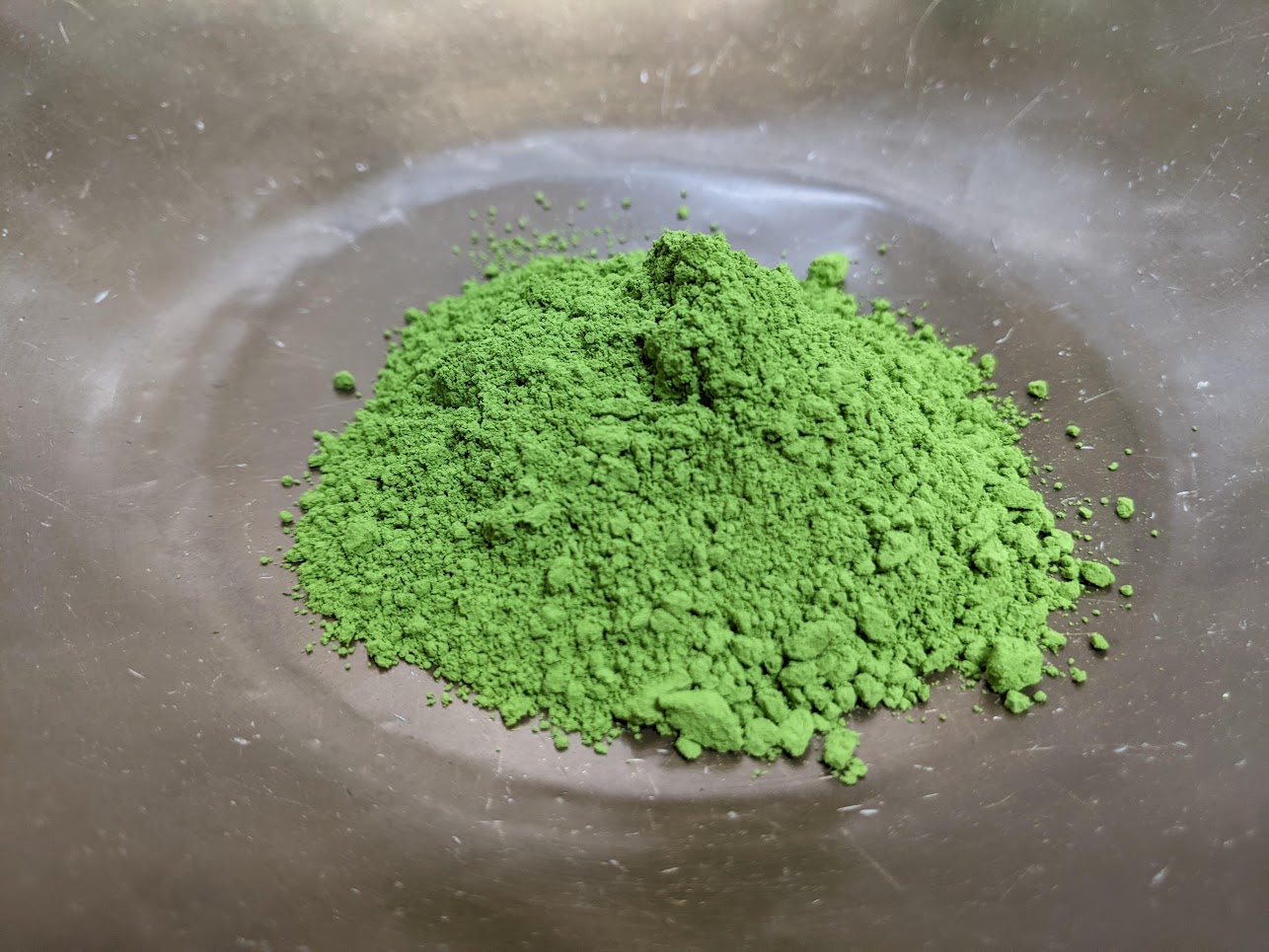
As matcha, however, I find that Okumidori can produce a particularly attractive green.
Shizuoka Prefecture’s Tea Research Center also lists Okumidori among the prefecture’s recommended cultivars that tend to perform well in the appearance and leaf color of tencha. [2]
These qualities are not identical in every batch. The growing conditions, harvest timing, and processing all matter. For me, part of Okumidori’s appeal is how differently its qualities can emerge in sencha and matcha.
What Does Okumidori Taste Like?
A cultivar name alone cannot fully describe how a tea will taste.
One quality I pay attention to in Okumidori is what we call egumi in Japanese. Here, I use the word to describe an unpleasant harshness in the taste. It should not be taken to mean that every Okumidori tea is harsh.
I have encountered this quality even in some first-flush Okumidori teas. “First flush” means the first harvest of the season, but that label alone does not guarantee a gentle taste.
Descriptions of tea often emphasize sweetness, umami, and green color. Those qualities matter, but so does checking for flavors that make a particular batch less enjoyable.
A Rain-Delayed Harvest: Our Experience in 2025
In 2025, we worked on producing organic second-flush Okumidori tea for matcha.
The harvest coincided with Japan’s rainy season. Rain prevented us from picking when planned, and the crop ultimately remained under shade for 20 days. The resulting tea had a very pronounced harshness.
That experience made me more cautious about harvest timing with Okumidori.
It does not demonstrate that 20 days of shading causes harshness. In fact, Shizuoka Prefecture’s Tea Research Center gives approximately three weeks of direct-cover shading, starting around the two-leaf stage, as a general guideline for tencha production. [2]
We did not conduct a controlled trial, so we cannot separate the effects of delayed picking, the condition of the shoots, shading, or other production factors.
I also suspect that fertilizer management may play a part, but I have not established it as the cause. Nor should this single experience be taken to mean that organic tea is inherently harsh.
What stayed with me was the practical difficulty of harvesting at the intended time—and the importance of tasting the finished tea, even when working with a highly regarded cultivar.
Watch: Whisking Kumamoto-Grown Okumidori Matcha
The accompanying video shows matcha made from Okumidori grown in Kumamoto, being whisked with a bamboo whisk, or chasen.
It offers a closer look at this particular matcha as it is prepared. The appearance of one batch should not be treated as a guarantee of how every Okumidori matcha will look or taste.
How to Choose Okumidori Tea
Start with how you want to enjoy it.
- For sencha: Look at the seller’s description of aroma, umami, and astringency, as well as color.
- For matcha to drink with water: Look for a product intended for whisking and drinking on its own.
- For lattes or baking: Choose a matcha described for that use, rather than relying on the cultivar name alone.
- To explore the cultivar itself: Check whether the tea is single-cultivar Okumidori or a blend.
If you are trying a tea for the first time, a small pack is a useful way to discover whether its flavor suits you.
I continue to see Okumidori as an appealing cultivar for both sencha and matcha. Its reputation is a reason to explore it, while the individual tea’s flavor is what ultimately matters in the cup.
Further Reading
The following Sanrokuen articles are in Japanese:
- Kumamoto Matcha: An Emerging Choice in a Changing Market
- A Composition Comparison of Kumamoto and Uji Matcha
References
- Kyoto Prefecture: Characteristics of Recommended Tea Cultivars — Japanese.
- Shizuoka Prefecture: Technical Questions Answered by the Tea Research Center — Japanese.
Market observations, taste and color comparisons, and the 2025 production account reflect the author’s experience. They are not findings from a controlled comparative trial.