Premium drinking
For usucha, tea practice, gifts and customers who care most about refined umami, aroma and finish.
- First-harvest options
- Single-cultivar and blended styles
- Organic option available
Japanese tea company in Kumamoto · Since 1975
Compare first-harvest drinking matcha, organic matcha, versatile latte options, and business-use tea powders from Sanrokuen in Kumamoto, Japan.
The best matcha depends on the final cup or recipe. Start with use, then compare origin, cultivar, harvest, flavor, color, powder behavior and budget.
For usucha, tea practice, gifts and customers who care most about refined umami, aroma and finish.
Milk changes how matcha tastes. A useful latte matcha needs enough body and tea presence to remain clear in the finished drink.
For baking, ice cream, soft serve and food manufacturing, the best ingredient may be matcha—or a selected shaded green tea powder.
Rather than forcing every product into one vague “ceremonial” label, Sanrokuen explains origin, cultivar and intended use so buyers can compare the actual differences.
A first-harvest Japanese matcha from Sagara built around Tsuyuhikari and Seimei, designed for balanced umami, clear color and practical versatility.
A Japanese matcha from Kikuchi blending three cultivars for body, clarity and refinement. It is intentionally strong enough for latte while remaining suitable for direct drinking.
A selected single-cultivar Japanese matcha emphasizing umami, aroma, elegance and premium drinking quality rather than maximum strength in milk.
Premium organic Japanese matcha from Kumamoto made from 100% organic Seimei tencha, linking modern cultivar development with Kumamoto's older tea history.
The four products above are not the whole business range. Sanrokuen also discusses business-use matcha grades and shaded Japanese green tea powder where stronger flavor, recipe performance, supply and cost are the priority.
Origin alone does not decide matcha quality. We look at tea material, cultivar, covered cultivation, sensory evaluation, component data, milling and the final intended use.
Selected first-harvest and second-harvest materials are compared using data such as total nitrogen, free amino acids, theanine, fiber and tannin. The numbers support—not replace—tasting.
Cultivar, shading, harvest timing and target quality are discussed with producers. Results can then be compared and fed back into future tea making.
Particle size and milling influence smoothness, dispersion, foam, handling and recipe performance. Finer is not automatically better for every buyer or every use.
These pages are based on Sanrokuen's own tea handling, testing and processing rather than a generic summary of matcha.
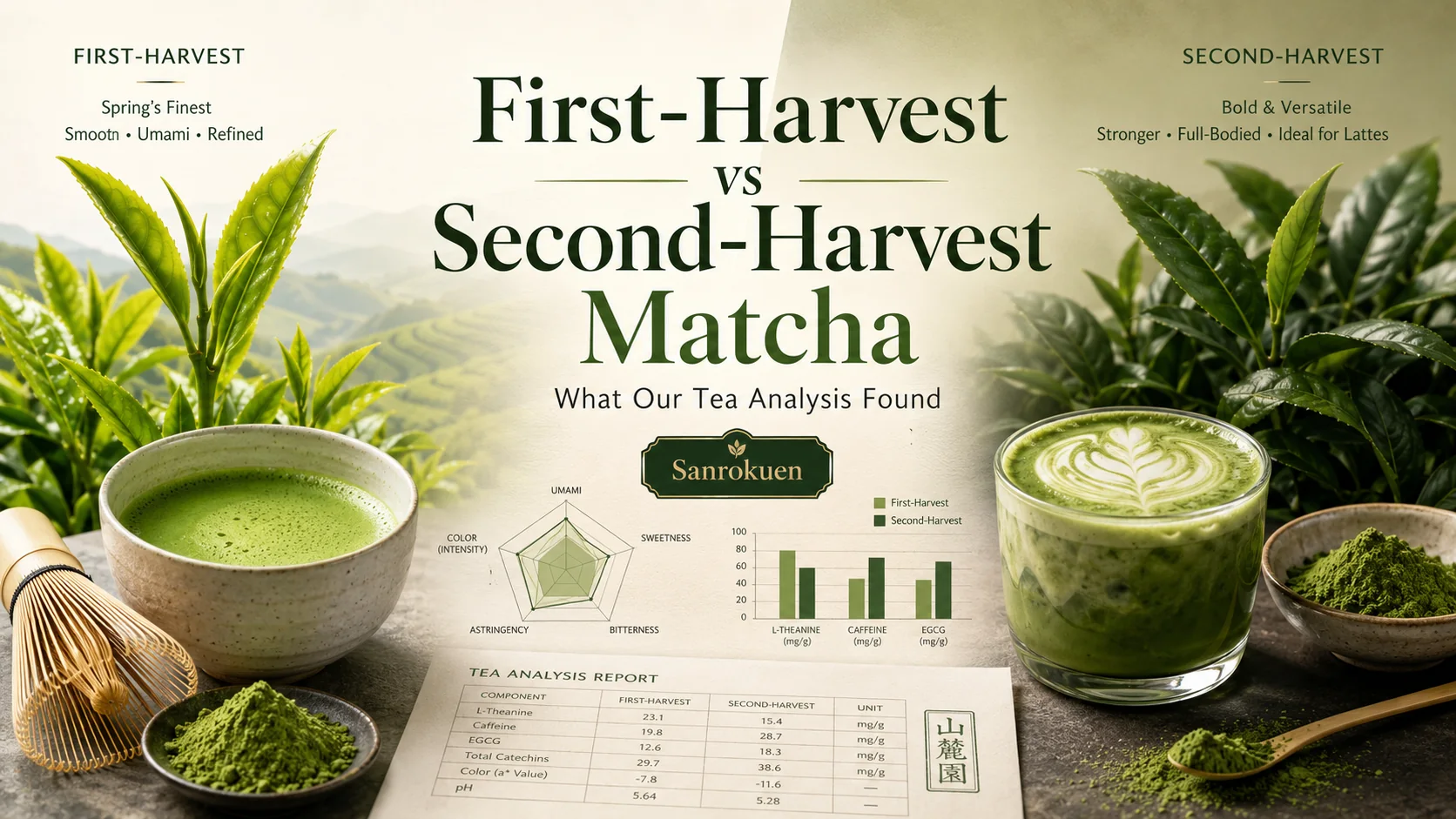
Our comparison of five first-harvest lots and three second-harvest Saeakari lots shows why harvest timing changes amino acids, theanine, tannin and practical use.
Read the harvest analysis →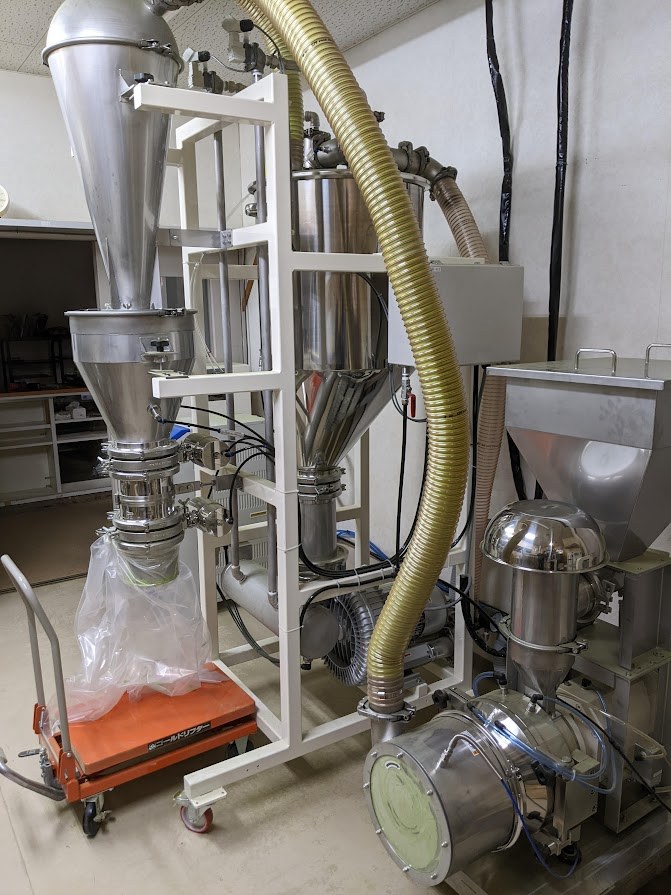
Using the same tea material, Sanrokuen measured different particle-size results from cyclone and ball milling and explains what the difference means in real use.
Read the milling comparison →Kumamoto is not as internationally famous for matcha as Kyoto or Uji. That is precisely why Sanrokuen explains the origin carefully instead of relying on name recognition alone.
Kumamoto has an old tea history, including medieval records preserved in the Hirakawa family documents. Today, the region also has experienced tea producers and a culture of evaluating tea quality with both sensory judgment and component data.
Sanrokuen's goal is not to claim that a lesser-known origin is automatically superior. The goal is to show where each tea comes from, how it was made, what the current lot actually tastes like, and where it performs best.
See Kumamoto component analysis →The main page should help you choose quickly. Detailed research, reviews and market updates are kept as separate supporting pages.
What buyers actually said about Chiran Matcha for taste, color, value, latte and desserts.
Read analysis →Review data and research on why some customers use matcha as part of an everyday routine.
Read article →L-theanine, catechins including EGCG, caffeine, dietary fiber, vitamins and minerals explained with Japanese food composition data and research.
Read Matcha Nutrition →Human matcha trials and larger green-tea meta-analyses reviewed together. Our conclusion: the evidence leans positive, but the effect appears modest.
Read the blood sugar research →Our measured comparison shows how L-theanine, free amino acids, tannins and fiber can differ between first-harvest matcha and third-harvest powdered green tea.
Read the harvest analysis →What makes true matcha different from powdered sencha, gyokuro or tamaryokucha—and why the best ingredient still depends on the recipe.
Read guide →Research and Sanrokuen data on fresh-leaf quality, direct vs shelf shading, and traditional vs simplified tencha processing.
Read the analysis →See how open-field sencha, kabusecha, gyokuro and tencha diverge through shading, leaf chemistry, covered aroma and post-harvest processing.
Compare the tea types →Why Japanese matcha buyers are paying more attention to origin, grade, intended use and alternative supply options.
Read update →For cafés, restaurants, retailers and food businesses
Please include your destination country, intended use, estimated quantity, preferred taste, color requirement and budget range. Overseas shipping and import requirements vary by destination, so supply conditions are confirmed case by case.
If your use is specific, the fastest way to choose is to tell us the recipe, quantity and target price.
No. Sanrokuen therefore prefers to explain actual information such as origin, harvest, cultivar, shading, analysis and intended use instead of relying only on an undefined marketing grade.
For first-harvest retail matcha, Kikuchi Enju is intentionally designed with enough body for latte while still working for direct drinking. For larger-volume café or food-service use, business grades may be more practical.
Yes. Hirakawa no Mukashi is a premium organic Kumamoto matcha made from 100% organic Seimei tencha. Wholesale organic availability depends on the current lot and required quantity.
Availability depends on the destination country, quantity, shipping method, food-import rules and required documents. Please contact Sanrokuen with the destination and intended use so we can confirm practical options.