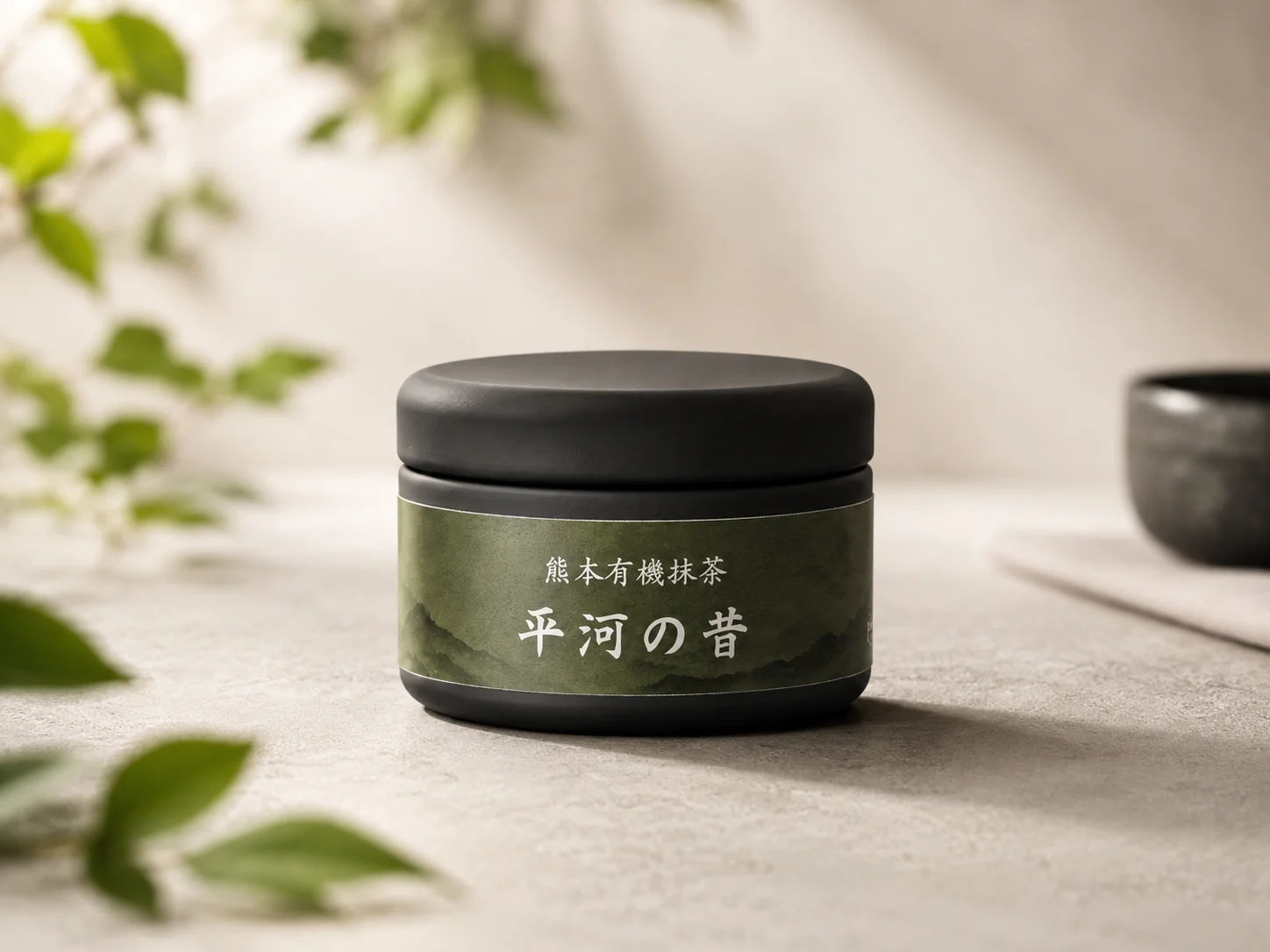
Hirakawa no Mukashi is Sanrokuen's upper-tier organic Kumamoto matcha made from Seimei tencha. The tea itself is modern, but the name was created to honor a much older story: a document dated 1191 in the Hirakawa family records lists “tea, 50 kin” among the products of Hatsugami village in the Kuma region. We present the product as Kumamoto Densho Matcha (熊本伝承抹茶 / Kumamoto Heritage Matcha)—a contemporary organic matcha connected in name and story to one of Japan's oldest documented tea-producing traditions.
An organic Japanese matcha with a clear Kumamoto identity
Many overseas buyers know Japanese matcha mainly through famous origins such as Uji, Kyoto, Yame or Kagoshima. Kumamoto is less widely known internationally as a matcha origin, even though it has a long tea-growing tradition and a strong culture of tea quality evaluation.
Hirakawa no Mukashi is designed to make that origin more specific: Kumamoto-grown organic tencha, the named Seimei cultivar, an award-backed producer, and an 1191 regional tea record that gives the product a genuine sense of place.
Zen, Eisai and a tea record from 1191
For many people outside Japan, Japanese tea is closely associated with Zen. One of the central figures in that story is Eisai (1141–1215), traditionally regarded as the founder of the Rinzai school of Zen in Japan. Saga Prefecture's official tea-culture account describes the tradition that Eisai sowed tea seeds brought from Song China in 1191, an episode regarded there as the beginning of tea cultivation in Japan.
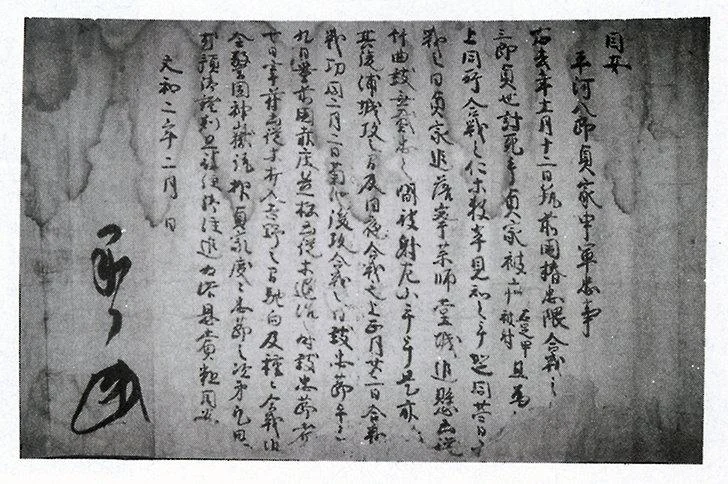
Kumamoto preserves another striking record from that same year. A document dated May 3, 1191 (Kenkyu 2), preserved among the Hirakawa family documents, lists the products of villages in the Kuma region. For Hatsugami village, the document includes the words “tea, 50 kin” (茶五十斤). This surviving record shows that tea was already a recorded local product in this part of Kyushu at the end of the 12th century.
Japanese tea history commonly associates 1191 with Eisai's return from Song China and the planting of tea seeds in Kyushu.
The Hirakawa document from the same year records “tea, 50 kin” for Hatsugami village in the Kuma region.
Why this matters
We do not claim that Eisai personally brought tea to this village, or that Hirakawa no Mukashi is made from an 800-year-old tea lineage. The historical point is more interesting: while 1191 is famous in the story of Eisai and the spread of tea cultivation in Japan, a surviving document from the Kuma region records 50 kin of tea in the very same year.
That makes the Kuma area of Kumamoto part of the conversation about Japan's oldest documented tea-producing regions. For us, this is a more meaningful foundation for a Kumamoto matcha story than simply calling the region “new” or “alternative.”
Why we named it “Hirakawa no Mukashi”
Hirakawa no Mukashi (平河の昔) was created as the name of Sanrokuen's Kumamoto heritage matcha. Mukashi means “long ago” or “the old days.” The name deliberately looks back to the Hirakawa family documents and the exceptionally early record of tea in the Kuma region.
Our concept is Kumamoto Densho Matcha (熊本伝承抹茶)—which we express in English as Kumamoto Heritage Matcha. The product combines two eras: the long history of tea in Kumamoto and a modern organic matcha made from the newer Seimei cultivar.
The name Hirakawa no Mukashi is a registered trademark in Japan. It is therefore not simply a descriptive phrase but a product identity created to communicate this specific Kumamoto tea story.
Made from organic Seimei tencha
Why tencha matters
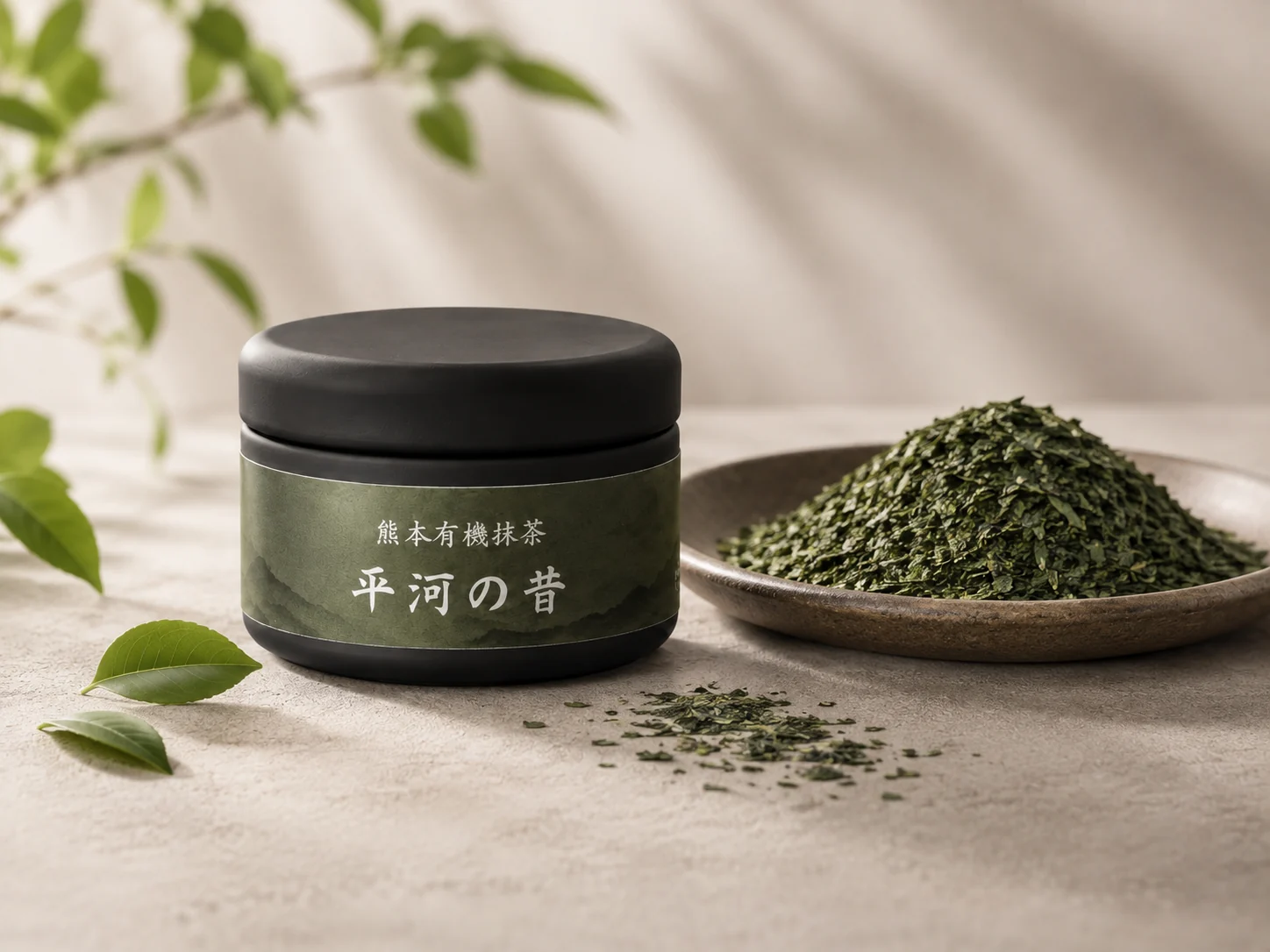
Matcha is made by finely milling tencha: shaded tea leaves that are steamed and dried without the rolling process used for sencha or tamaryokucha. This is what distinguishes true matcha from ordinary green tea powder.
For Hirakawa no Mukashi, the raw material is organic tencha using the Seimei cultivar. The cultivar and raw-material identity are important information for specialty retailers, tea professionals and buyers evaluating Japanese matcha by more than color alone.
Why we use the Seimei cultivar
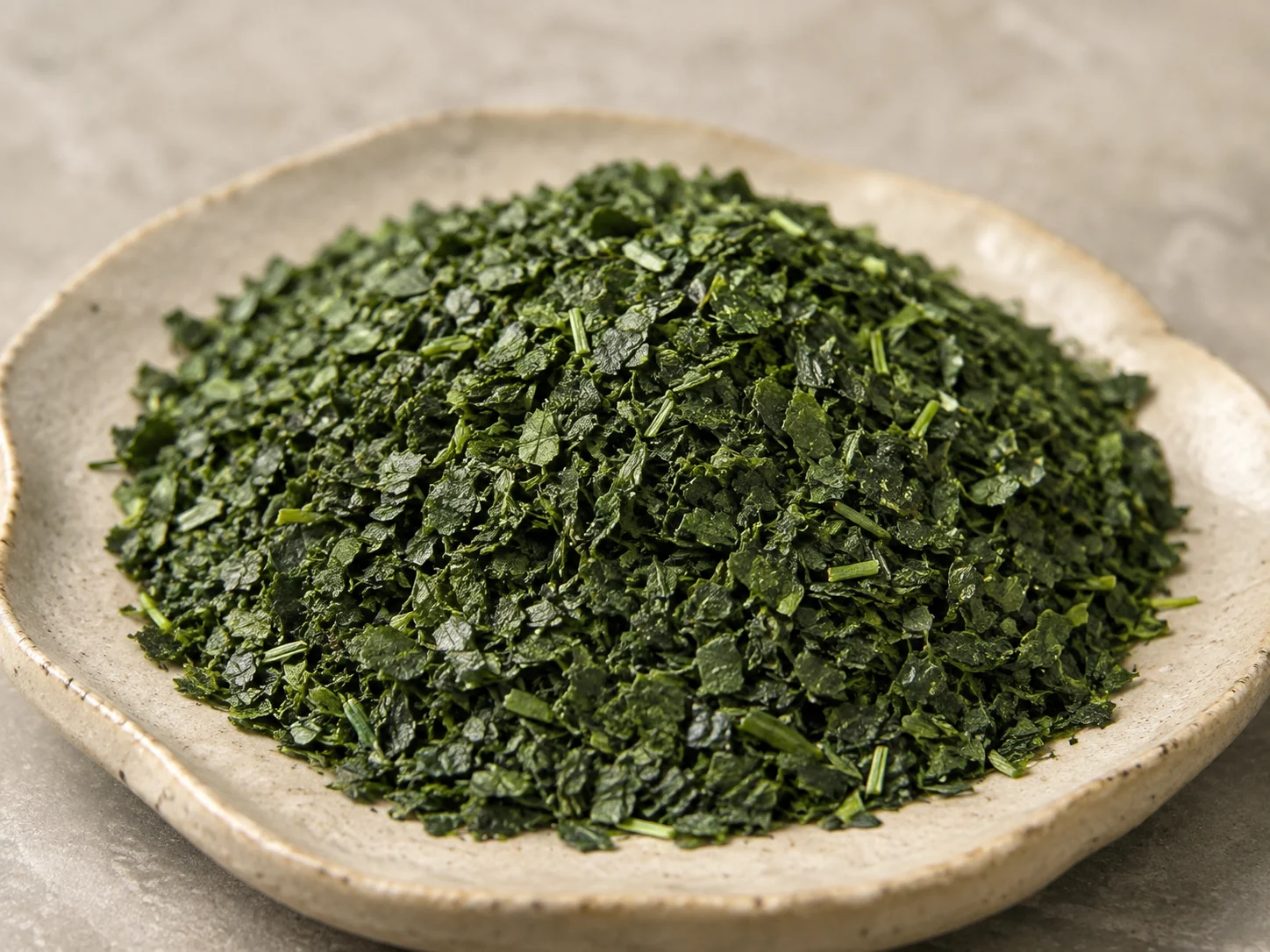
Seimei is a Japanese green tea cultivar developed by Japan's National Agriculture and Food Research Organization (NARO). NARO reports that Seimei performs well under covered cultivation and is suited to high-quality matcha and powdered tea, with favorable processed-tea color and umami characteristics.
Those traits are relevant to matcha because shading, leaf quality, cultivar, tencha processing and milling all influence the final color, aroma, umami, bitterness and texture.
Raw material from one of Kumamoto's leading tea producers
The organic tencha used for Hirakawa no Mukashi comes from one of the most highly regarded tea producers in Kumamoto Prefecture. We do not emphasize only a name; what matters to overseas buyers is the level of production, recognition and reliability behind the leaf.
This producer is widely recognized in Kumamoto for high-quality tea cultivation, processing and organic tea production. The track record includes repeated recognition in Japan Tea AWARD, top placements in the Kumamoto Prefectural Tea Competition, international recognition in Paris, and long-term work in cultivation, processing, certification and export.
In short, the raw material is not just organic—it comes from a producer who is considered by many in the prefecture to be one of Kumamoto's top tea growers.
| 2025 | Japan Tea AWARD Platinum Award in the organic tea category. Only 20 platinum winners were selected from 503 entries. |
|---|---|
| 2024 | Two Japan Tea AWARD Fine Product Awards awarded in the same year, including an organic tea entry and a sencha tea bag entry. |
| 2022–2025 | Four consecutive years of Japan Tea AWARD recognition, showing sustained evaluation rather than a single-year result. |
| 2019 | 1st Prize, 1st Place in the Kumamoto Prefectural Tea Competition (sencha division), plus Bronze Award at AVPA Paris “Teas of the World”. |
| 2018 | 1st Prize in the Kumamoto Prefectural Tea Competition, with the producer family recognized across multiple divisions. |
| 2017 | Grand Prize Winner at the international “Nippon no Takaramono” World Competition in Singapore. |
| 2020 | Kumamoto Agricultural Competition – Excellence Award in the management category, equivalent to a top-level prefectural honor. |
| Other strengths | JGAP certification (2019), Organic JAS certification (2021), export experience to Singapore, Oman, the United States and France, plus recognized leadership in cultivation, factory operation and tea education. |
For a buyer evaluating Hirakawa no Mukashi, this means the matcha is backed not only by origin and cultivar, but also by a raw-material source with a proven record in quality evaluation, organic production, export readiness and practical farm management.
Product profile
| Product name | Hirakawa no Mukashi / 平河の昔 |
|---|---|
| Concept | Kumamoto Densho Matcha (熊本伝承抹茶) / Kumamoto Heritage Matcha |
| Product type | Organic Japanese matcha |
| Origin | Kumamoto Prefecture, Japan |
| Cultivar | Seimei |
| Raw material | 100% organic tencha |
| Positioning | Premium drinking matcha; suitable for usucha, tea service and quality-focused retail |
| Producer background | Raw material sourced from one of Kumamoto Prefecture's leading tea producers with award-winning organic tea and competition results |
| Historical reference | Hirakawa family document dated 1191 listing “tea, 50 kin” (茶五十斤) for Hatsugami village in the Kuma region |
| Trademark | Hirakawa no Mukashi is a registered trademark in Japan |
| Retail package | 30 g can |
| Retail price in Japan | JPY 2,160 (tax included) |
| Online purchase | Sanrokuen Online Shop |
| Business supply | Current availability, sample supply, bulk quantity and packaging are confirmed by inquiry |
| Export | Availability depends on destination, importer requirements, quantity, shipping method and required documentation |
Recommended uses
A natural first use for a drinking-grade organic matcha. Adjust water temperature and powder quantity to your preferred balance of aroma, umami and bitterness.
The Kumamoto origin, organic tencha and named Seimei cultivar give specialty shops and private brands a clearer story than an anonymous blended matcha.
Suitable for importers and cafés looking to compare less common Japanese matcha origins. Ask for the current lot and available documentation before commercial use.
Why Kumamoto matcha?
Kumamoto is one of Japan's established tea-producing prefectures, but its matcha is still relatively unfamiliar overseas. The 1191 Hirakawa family record gives the Kuma region an unusually deep documentary connection to tea, while today's growers, cultivars and processing technology create a modern matcha industry on top of that history.
Sanrokuen therefore does not present Kumamoto merely as a lower-profile alternative to famous origins. We present it as a tea region with both old documentary roots and modern production capability, and invite buyers to evaluate the actual matcha on color, aroma, taste, cultivar, analysis and supply conditions.
Quality, organic requirements and documentation
For business and export inquiries, the useful question is not only whether a product is “premium,” but whether the current lot meets the buyer's practical requirements. Sanrokuen can discuss current product specifications, packaging, sample availability and available testing or certification documents.
Requirements for organic labeling and food import differ by destination. Overseas buyers should confirm importer-side rules before ordering. Where specific certificates, laboratory tests or export documents are required, please tell us the destination country and required documents at the inquiry stage.
Frequently asked questions
What is Hirakawa no Mukashi?
It is Sanrokuen's premium organic Kumamoto matcha made from 100% organic tencha using the Seimei tea cultivar.
Why is it called “Hirakawa no Mukashi”?
The name was inspired by the Hirakawa family documents. A document dated 1191 records “tea, 50 kin” for Hatsugami village in the Kuma region. Sanrokuen created the product concept Kumamoto Densho Matcha (Kumamoto Heritage Matcha) to connect modern organic matcha with this exceptionally old regional tea record.
What is the connection with Zen monk Eisai?
1191 is also the year traditionally associated with Eisai returning from Song China with tea seeds, a famous story in Japanese tea history. We do not claim a direct connection between Eisai and the Hirakawa document; the significance is that Kumamoto has a surviving tea record from the same year.
Is this matcha itself 800 years old?
No. Hirakawa no Mukashi is a modern organic matcha made from Seimei tencha. The historical record is the inspiration for the name and the Kumamoto heritage story.
Is it true matcha or ordinary green tea powder?
It is matcha made from tencha. It is not powdered sencha or powdered tamaryokucha.
What is special about Seimei?
Seimei is a Japanese cultivar developed by NARO. NARO reports that it is well suited to covered cultivation and the production of high-quality matcha and powdered tea, with strong color and umami characteristics.
What kind of producer stands behind this matcha?
The tencha comes from one of Kumamoto Prefecture's best-known and most highly regarded tea producers, with repeated Japan Tea AWARD recognition, prefectural competition results, Organic JAS certification and export experience.
Can overseas buyers request samples?
Yes, depending on destination and shipping arrangements. Please include your country, intended use, expected quantity and whether you need organic or import-related documents.
Is wholesale supply always available?
No. Matcha is an agricultural product and availability can change by harvest, lot and reservation status. Please ask for current stock and supply conditions.
Interested in Hirakawa no Mukashi?
For samples, retail sourcing, wholesale discussion or overseas distribution, please tell us your country, intended use, expected quantity and any required documents. We will confirm the current lot and realistic supply conditions.
Buy in Japan · JPY 2,160 / 30 g Contact Sanrokuen Wholesale matcha All Sanrokuen matchaSources and related information
- Taragi Town, Kumamoto: Hirakawa family documents (平川家文書), designated Kumamoto Prefectural Important Cultural Property.
- Heibonsha / Kotobank: Hatsugami village entry citing the 1191 Hirakawa document and “tea, 50 kin” (茶五十斤).
- Saga Prefecture: tea-culture material describing the tradition that Rinzai founder Eisai planted tea seeds brought from Song China in 1191.
- NARO: Green tea cultivar “Seimei” suitable for Matcha and powdered tea.
- Producer background compiled from award and certification information supplied by Sanrokuen, including Japan Tea AWARD, Kumamoto Prefectural Tea Competition, Organic JAS and export achievements.
- Sanrokuen: Japanese Matcha Cultivars Guide
- Sanrokuen: Kumamoto Matcha
- Sanrokuen: Hatsugami no Shiro — First-Harvest Kumamoto Matcha
- Sanrokuen: Wholesale Japanese Matcha & Green Tea Powder
- Japanese version: 熊本伝承抹茶「平河の昔」
- Japanese article introducing Sanrokuen's Kumamoto matcha line
Product characteristics can vary by agricultural lot and processing conditions. For commercial purchases, please confirm the current sample and specification before final selection.