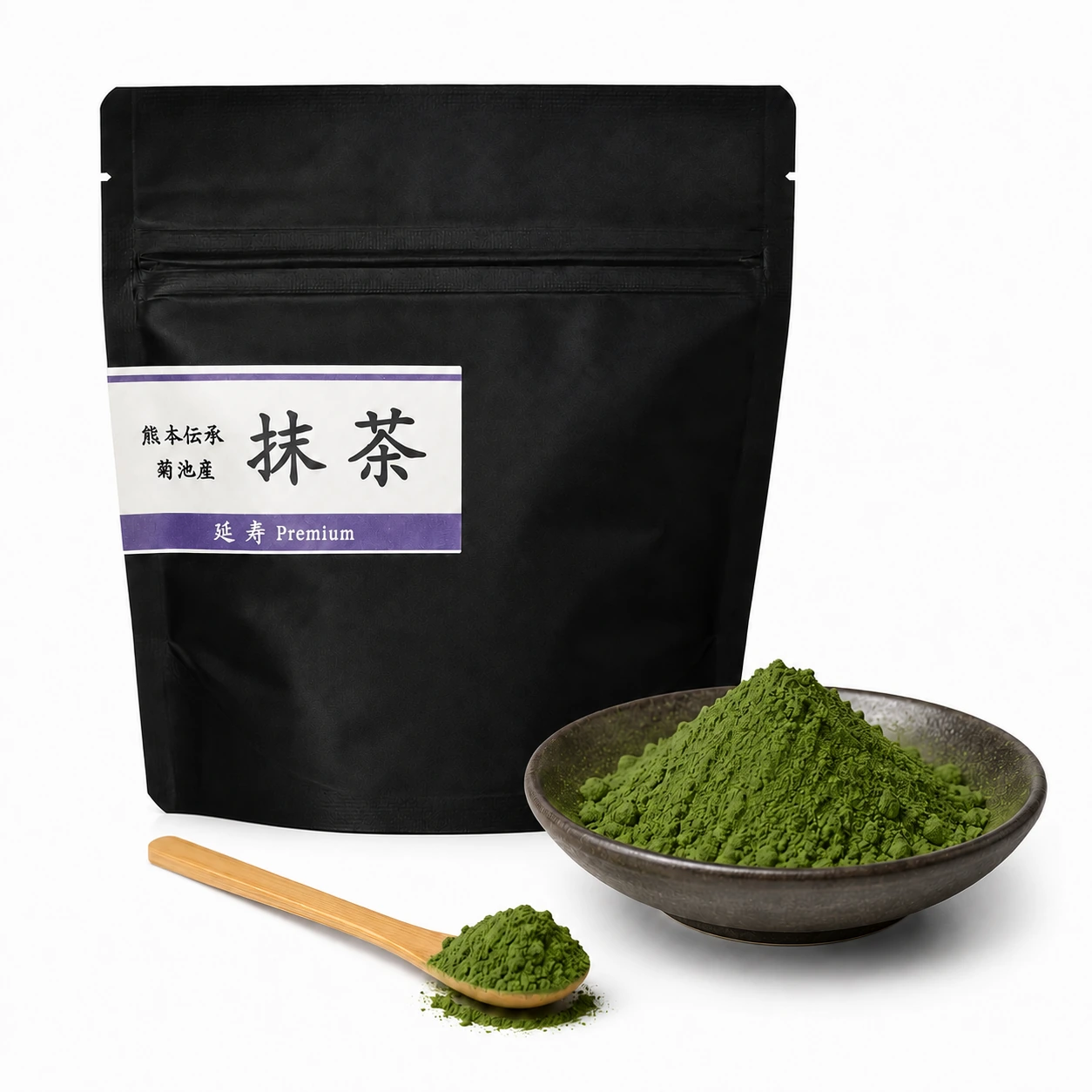
Kikuchi Enju Premium is the higher-selection expression of Sanrokuen's Kumamoto Densho Matcha (熊本伝承抹茶 / Kumamoto Heritage Matcha) series. Unlike regular Kikuchi Enju, which blends three cultivars for versatility and strength, the Premium version is made from Tsuyuhikari only—specifically a lot selected for its outstanding analytical profile, vivid color and refined drinking quality.
Premium means selection—not simply a different label
The purpose of Enju Premium is not merely to make the standard Enju more expensive. Sanrokuen selected a specific Tsuyuhikari lot because it best matched the qualities we wanted from a higher-end drinking matcha: strong umami, expressive aroma, low harshness, refined flavor and a richer visual impression.
We paid particular attention to amino-acid-related values for umami, theanine, tannin level, fiber, color and AF score. The final decision was made by combining those measurements with sensory evaluation rather than choosing by one number alone.
Why this Tsuyuhikari lot was selected
Enju Premium uses the Tsuyuhikari lot that delivered Sanrokuen's strongest overall analytical result among the tested candidate lots for this selection. The idea was to use testing as a filter for quality, then confirm the result in the cup.
Free amino acids measured 6.0% and theanine 3.5% in the raw aracha. These were important reasons for choosing the lot for a richer, more satisfying drinking style.
Tannin measured 6.2%. For this product, we wanted power to come from richness and aroma rather than excessive bitterness or astringency.
Color, fiber and the AF score of 104 were also part of the selection. The target was a premium matcha that looks as convincing as it tastes.
2026 selected Tsuyuhikari raw-material analysis
The following component values were measured on the raw aracha before final refining and milling. Sanrokuen used these results as one of the main tools for choosing the material for Enju Premium.
| Component | Selected Tsuyuhikari raw aracha |
|---|---|
| Moisture | 1.9% |
| Total nitrogen | 6.9% |
| Free amino acids | 6.0% |
| Theanine | 3.5% |
| Fiber | 18.7% |
| Tannin | 6.2% |
| Caffeine | 2.3% |
| Vitamin C | 0.43% |
Sanrokuen analytical reference
The numbers do not replace tasting. However, they explain why this lot attracted our attention. High free amino acids and theanine support the goal of deep umami, while the lower tannin level was consistent with our aim for a more elegant and less aggressive cup. The AF score and visual assessment helped us narrow the choice further.
Kikuchi Enju vs Kikuchi Enju Premium
The two products share the same Enju identity, but they are designed for different priorities. Regular Enju emphasizes versatility and flavor strength. Premium emphasizes lot selection and the highest level of drinking quality we could obtain from the selected Tsuyuhikari material.
| Point | Kikuchi Enju | Kikuchi Enju Premium |
|---|---|---|
| Cultivars | Sayamakaori + Tsuyuhikari + Saemidori | Tsuyuhikari only |
| Main design goal | Strength, clarity and balance | Maximum umami, aroma and refinement |
| Selection method | Blend design using sensory and component evaluation | Specific high-performing lot selected by analysis, color and sensory evaluation |
| Best fit | Premium latte, everyday drinking, usucha, desserts | Usucha, tea practice, premium direct drinking |
| Japanese retail size | 50 g | 30 g |
| Japanese retail reference price | JPY 1,080 | JPY 1,380 |
Read the full Kikuchi Enju product story and three-cultivar blend concept →
Why Tsuyuhikari for the Premium expression?
Regular Enju uses Tsuyuhikari as the cultivar that gives the blend clarity and a clean, defined profile. In Enju Premium, we take that role further by using Tsuyuhikari alone.
The selected 2026 first-harvest tea was shaded for approximately 18–20 days before harvest. Instead of using another cultivar to add body or softness, the Premium version depends on the quality of this one selected lot to deliver umami, aroma, color and finish on its own.
This makes Enju Premium less about blend engineering and more about raw-material selection.
The Enju name: strength transformed into refinement
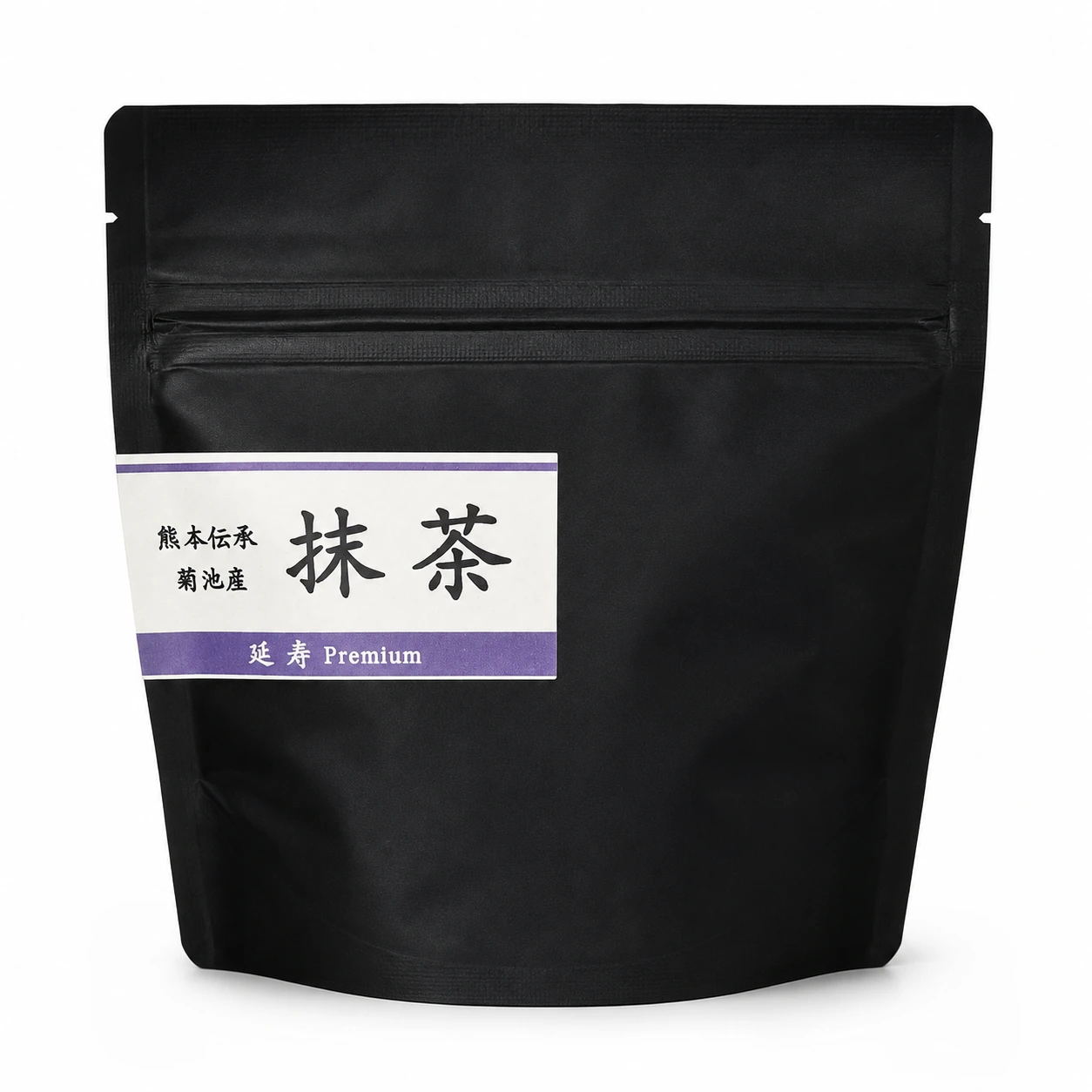
The name Enju (延寿) carries an auspicious meaning associated with extended longevity and good fortune. It also connects this matcha to Kikuchi's medieval Enju swordsmith tradition—the regional story that inspired the original Kikuchi Enju concept.
We use the sword history as regional and creative inspiration, not as a claim of a direct historical production lineage between swordmaking and tea. For the full background on the Kikuchi clan, Enju swordsmiths and the later Dotanuki tradition, see the regular Kikuchi Enju page.
How we recommend using Kikuchi Enju Premium
This is the primary recommendation. The product is selected to show its umami, aroma and refined finish when prepared simply with water.
A strong choice when you want a serious everyday matcha rather than an economical practice-only powder. Customers who practice tea ceremony have also responded favorably after launch.
It can be used with milk, but the product's main value is its drinking quality. For large milk ratios or sweeter recipes, regular Kikuchi Enju may offer better cost-performance.
Product profile
| Product name | Kikuchi Enju Premium / 菊池 延寿 Premium |
|---|---|
| Series | Kumamoto Densho Matcha / Kumamoto Heritage Matcha |
| Origin | Kikuchi City, Kumamoto Prefecture, Japan |
| Harvest year | 2026 |
| Harvest season | First harvest / ichibancha |
| Cultivar | Tsuyuhikari only |
| Shading | Approximately 18–20 days before harvest |
| Selection concept | Selected high-performing lot based on component analysis, color and sensory evaluation |
| Taste concept | Rich umami, expressive aroma, refined flavor and a premium finish with controlled harshness |
| Recommended uses | Usucha, tea practice, premium daily drinking; premium latte as a secondary use |
| Japanese retail size | 30 g |
| Japanese retail reference price | JPY 1,380 (tax included, current listing) |
| Japanese retail product | Sanrokuen online store product page |
| Historical inspiration | The auspicious Enju name and Kikuchi's historic Enju swordsmith tradition |
Frequently asked questions
What is Kikuchi Enju Premium?
It is Sanrokuen's premium Kumamoto Heritage Matcha from Kikuchi City, made only from a selected 2026 first-harvest Tsuyuhikari lot. The material was selected to maximize umami, aroma, refinement and premium appearance.
How is it different from regular Kikuchi Enju?
Regular Kikuchi Enju is a three-cultivar blend designed for strength, clarity and versatility, including latte use. Enju Premium uses only one selected Tsuyuhikari lot and places greater priority on premium drinking quality, umami, aroma and elegance.
Why was this lot selected?
Sanrokuen selected it after evaluating component analysis, color and sensory quality. The raw aracha measured 6.0% free amino acids, 3.5% theanine, 6.2% tannin and an AF score of 104, together with a strong overall visual and sensory impression.
Are those component values for the finished matcha?
No. They were measured on the raw aracha before final refining and milling. They are reference values used for lot selection, not guaranteed finished-product specifications or nutrition-label values.
Is AF score 104 an official matcha grade?
No. AF score is a Sanrokuen analytical reference indicator used alongside other component values, color and sensory evaluation. It is not an official Japanese matcha grade or an industry-wide standard.
Is it suitable for tea ceremony practice?
Yes. Enju Premium is designed primarily as a drinking matcha for usucha and premium everyday preparation. Sanrokuen has also received favorable feedback from customers who practice tea ceremony after release.
Interested in Kikuchi Enju Premium?
For retail purchase in Japan, use our Japanese online store. Business and overseas buyers can contact Sanrokuen regarding current availability, samples, quantities, packaging and documentation requirements.
Japanese Retail Product Contact Sanrokuen Compare Regular EnjuSources and editorial basis
- Sanrokuen: Kikuchi Enju — explains the Enju product concept, Kikuchi historical inspiration, cultivar design and the relationship between the standard and Premium expressions.
- Sanrokuen: Tsuyuhikari Matcha Guide — Sanrokuen's practical evaluation of Tsuyuhikari for clean flavor, umami and matcha use.
- Sanrokuen: Kumamoto first-harvest matcha raw-material component analysis — explains Sanrokuen's component-testing approach for Kumamoto matcha raw material.
- Kikuchi City: Enju and the Kikuchi clan — official local historical context for the Enju swordsmith tradition.
- Kikuchi City: From Enju to Dotanuki — official local historical context for the later Enju/Dotanuki tradition.
- Sanrokuen Japanese online store: Kikuchi Enju Premium 30 g — Japanese retail product listing and reference price.
Product-specific 2026 harvest information, 18–20 day shading period, Tsuyuhikari single-cultivar selection, raw-aracha component values, AF score, sensory positioning and post-launch customer feedback on this page are first-party data supplied by Sanrokuen. The analytical figures were measured before final refining and milling and are not finished-matcha specifications. Historical material is used as regional context and creative inspiration rather than evidence of a direct production lineage between medieval swordsmithing and modern tea.