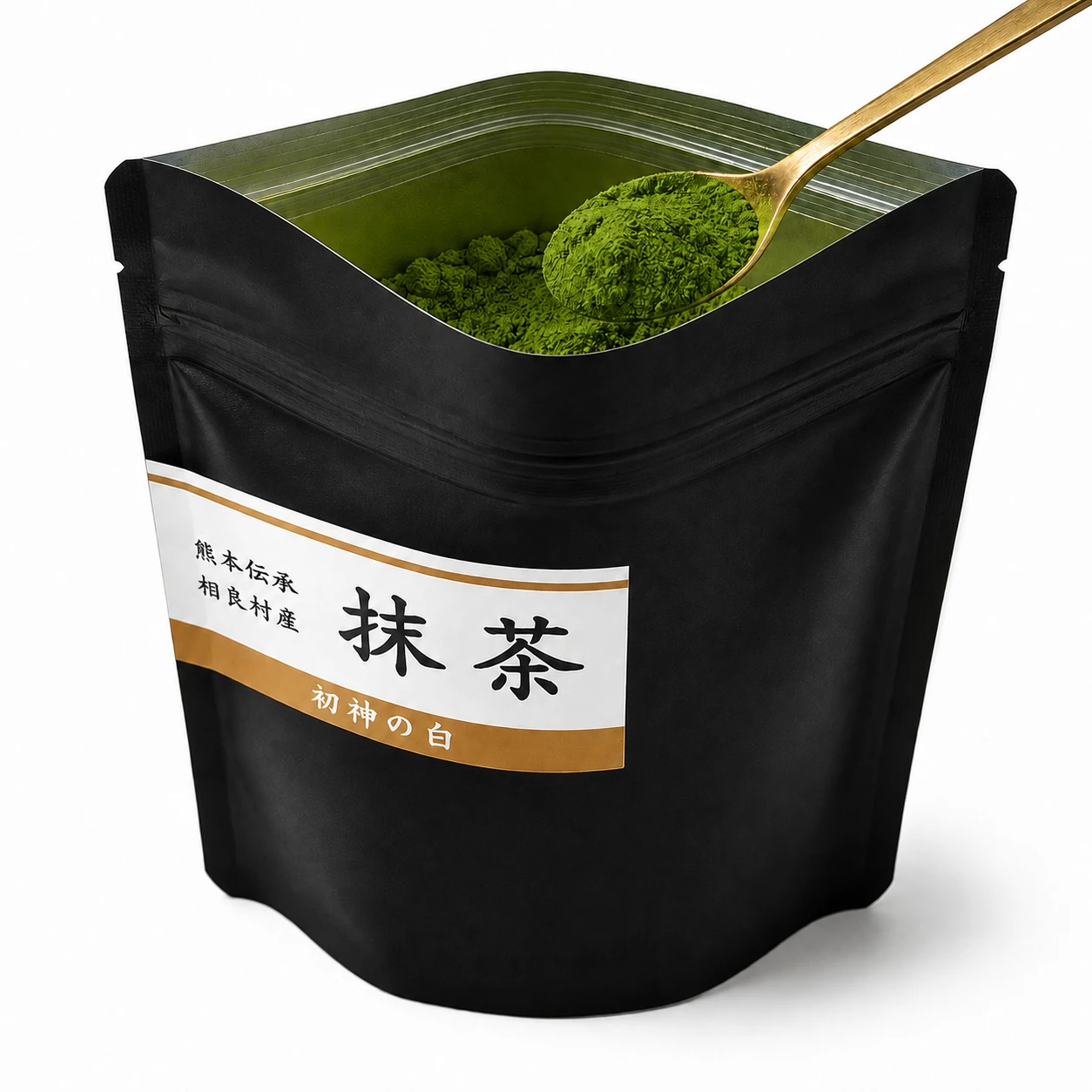
Hatsugami no Shiro is part of Sanrokuen's Kumamoto Densho Matcha (熊本伝承抹茶 / Kumamoto Heritage Matcha) series. It is made from 2026 first-harvest tea grown in Sagara Village, Kumamoto, and is blended from two cultivars with different strengths: Tsuyuhikari for a rich umami-centered foundation, and Seimei for aroma and a clearly defined flavor profile.
A Japanese matcha made for drinking—not only for color
Hatsugami no Shiro was developed as a matcha that can be used for traditional usucha, tea-ceremony practice and premium everyday drinking, while also retaining enough color and body for a carefully balanced latte.
Why blend Tsuyuhikari and Seimei?
In the 2026 raw-tea lots selected for this product, Tsuyuhikari showed particularly strong total nitrogen, free amino acid and theanine values. Sensory evaluation also gives it the role of the blend's deeper umami and body.
Seimei contributes a clearer aromatic character and helps give the finished blend a more sharply defined taste. It is also a cultivar developed for covered cultivation and high-quality matcha and powdered tea.
Sanrokuen does not disclose the exact blend ratio. We adjust the blend by evaluating the actual harvest, aroma, taste, color and component data rather than relying on cultivar names alone.
2026 first harvest, shaded for 18–20 days
The raw material used for the 2026 Hatsugami no Shiro comes from the first harvest (ichibancha) in Sagara Village. The tea was shaded for approximately 18 to 20 days before harvest.
Shading is important for matcha because it changes the way the tea plant develops before harvest. For this product, the objective is not simply to make the powder darker green. We use shading together with cultivar selection, harvest timing, sensory evaluation and component testing to produce a matcha with enough umami for drinking and enough visual strength for premium latte use.
The result is a vivid green powder with a smooth, approachable drinking profile, supported by the stronger umami character of the selected Tsuyuhikari lots.
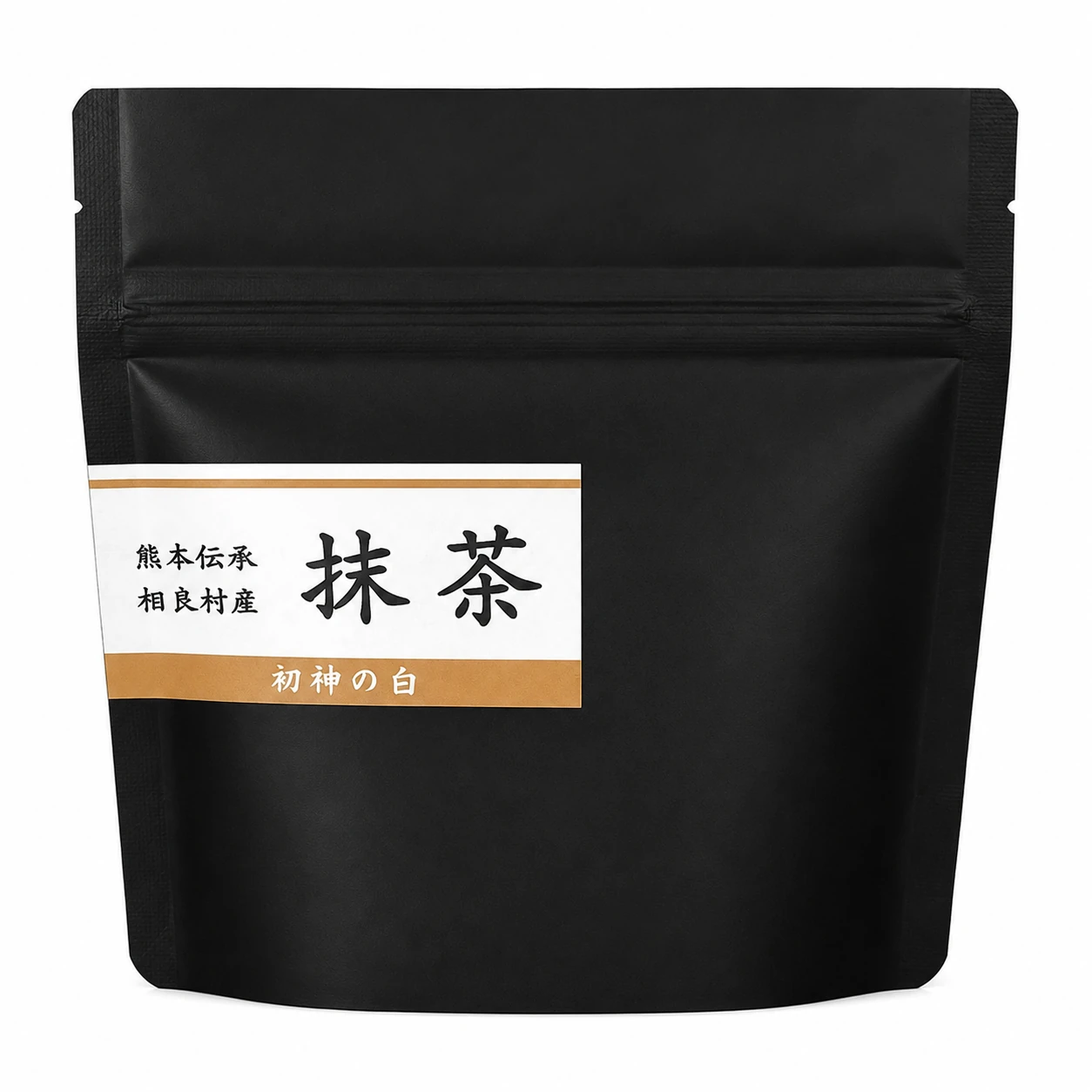
Why the name “Hatsugami no Shiro”?
The product is grown in today's Sagara Village in the Kuma region of Kumamoto. Its name looks back to Hatsugami Village (初神村), a historical village whose location is now identified as Youra, Hatsugami, Sagara Village.
The record appears in the medieval Hirakawa family documents. The historical place-name entry for Hatsugami Village cites a 1191 document that lists local products and includes “tea, 50 kin.” This makes the record especially meaningful for a modern matcha grown in the same present-day village area.
Japanese tea history commonly associates 1191 with the Zen monk Eisai returning from Song China with tea seeds and helping spread tea cultivation in Japan.
In the same year, a surviving document from the Kuma region records “tea, 50 kin” for Hatsugami Village, now part of Sagara Village.
From an old place-name to a modern Kumamoto matcha
Sanrokuen named this product Hatsugami no Shiro (初神の白) to connect a modern Sagara Village matcha with the documented tea history of historic Hatsugami Village. It is part of our broader Kumamoto Heritage Matcha concept: not a claim that the present tea trees are 800 years old, but a way to show that Kumamoto's tea story reaches much further back than its modern matcha reputation.
For an overseas buyer, this gives Hatsugami no Shiro a specific identity beyond the generic phrase “Japanese matcha”: a named product, a defined village, a documented 1191 tea record, modern cultivar selection and transparent lot analysis.
Selected 2026 raw-material component indicators
Sanrokuen uses component analysis together with sensory evaluation, color, aroma and actual preparation performance when selecting matcha raw material. For Hatsugami no Shiro, we publish only a small number of representative indicators from the selected 2026 Tsuyuhikari raw-material lots used as an important umami component in the blend.
| Selected indicator | 2026 Tsuyuhikari raw-material lots |
|---|---|
| Total nitrogen | 6.6–6.8% |
| Free amino acids | 5.4–5.6% |
| Theanine | 3.1–3.3% |
| AF score | 77–87 |
The strong amino-acid and theanine values of these selected Tsuyuhikari lots supported our sensory impression of deep umami. This is one reason Tsuyuhikari was chosen as an important umami foundation for the blend. Seimei is evaluated separately for the role it brings to the finished cup—especially aroma, clarity and flavor definition—rather than being presented here as a numerical comparison.
Component numbers alone do not determine matcha quality. Sanrokuen also evaluates color, aroma, aftertaste, mouthfeel, milling texture and performance when prepared as usucha or latte. More detailed analytical information can be discussed with business buyers when appropriate.
How we recommend using Hatsugami no Shiro
Suitable for drinking with water when you want balanced umami, aroma and a clean finish without excessive harshness.
A practical choice for lessons and regular practice when a real drinking matcha is preferred over lower-cost culinary powder.
The vivid powder color can produce a deep green latte, while the Tsuyuhikari-led umami helps the tea remain present with milk.
For very sweet drinks, large milk ratios, baking or food manufacturing, a stronger or more economical commercial grade may be more appropriate. See Sanrokuen's current wholesale matcha and green tea powder options →
Product profile
| Product name | Hatsugami no Shiro / 初神の白 |
|---|---|
| Series | Kumamoto Densho Matcha / Kumamoto Heritage Matcha |
| Origin | Sagara Village, Kuma District, Kumamoto Prefecture, Japan |
| Harvest year | 2026 |
| Harvest season | First harvest / ichibancha |
| Cultivars | Tsuyuhikari and Seimei blend |
| Shading | Approximately 18–20 days before harvest |
| Taste concept | Rich umami from Tsuyuhikari with Seimei aroma and a clearly defined finish |
| Color | Vivid green; suitable for visually strong premium lattes |
| Recommended uses | Usucha, tea practice, premium daily drinking, premium latte |
| Japanese retail size | 50 g |
| Japanese retail reference price | JPY 1,080 (tax included, current listing) |
| Historical reference | 1191 record listing “tea, 50 kin” for historic Hatsugami Village, now part of Sagara Village |
Frequently asked questions
What is Hatsugami no Shiro?
It is Sanrokuen's Kumamoto Heritage Matcha from Sagara Village, made from the 2026 first harvest and blended from Tsuyuhikari and Seimei.
Is Hatsugami no Shiro ceremonial grade?
“Ceremonial grade” is not a legally defined grade in Japan. Sanrokuen positions Hatsugami no Shiro as a drinking-grade matcha suitable for usucha, tea practice and premium everyday preparation.
Why is the product called Hatsugami no Shiro?
The name refers to historic Hatsugami Village, now part of Sagara Village. A surviving document dated 1191 records “tea, 50 kin” for Hatsugami Village, giving the name a direct connection to the area's documented tea history.
What is the connection with Eisai and Zen?
1191 is famous in Japanese tea history as the year traditionally associated with Zen monk Eisai bringing tea seeds back from Song China. We do not claim that Eisai personally introduced tea to Hatsugami. The important point is that a surviving Kuma-region document records tea in Hatsugami Village in that same year.
Which cultivars are used?
The 2026 product blends Tsuyuhikari and Seimei. Sanrokuen uses Tsuyuhikari as an umami-rich core and Seimei to add aroma and definition to the finished taste.
Can it be used for matcha latte?
Yes. It has a vivid green color and sufficient depth for a premium latte, while remaining a product designed first for drinking quality rather than only for food coloring or baking.
Interested in Hatsugami no Shiro?
For retail purchase in Japan, use our Japanese online store. Business and overseas buyers can contact Sanrokuen regarding samples, current availability, quantities, packaging and documentation requirements.
Japanese Retail Product Contact Sanrokuen Wholesale InformationSources and editorial basis
- Heibonsha / Kotobank: Hatsugami Village historical place-name entry — identifies the current location as Youra, Hatsugami, Sagara Village and cites the May 3, 1191 document containing “tea, 50 kin.”
- Taragi Town, Kumamoto: Hirakawa family documents — official local-government information on the medieval document collection, designated as a Kumamoto Prefectural Important Cultural Property.
- Saga Prefecture: tea-culture material — describes the tradition associating Rinzai founder Eisai with planting tea seeds brought from Song China in 1191.
- Shizuoka Prefecture Tea Research Center — notes Tsuyuhikari's tencha suitability, growth and color-related strengths.
- NARO: Seimei cultivar profile — describes Seimei as highly suited to covered cultivation, matcha and powdered tea.
- Sanrokuen: Kumamoto first-harvest raw-material component comparison — explains Sanrokuen's use of component testing in evaluating Kumamoto matcha raw material.
Product-specific 2026 harvest information, shading period, blend composition, sensory profile and selected component indicators on this page are first-party data supplied by Sanrokuen. The published figures are raw aracha reference values, not the finished-matcha specification. Complete lot-analysis data are not publicly disclosed.