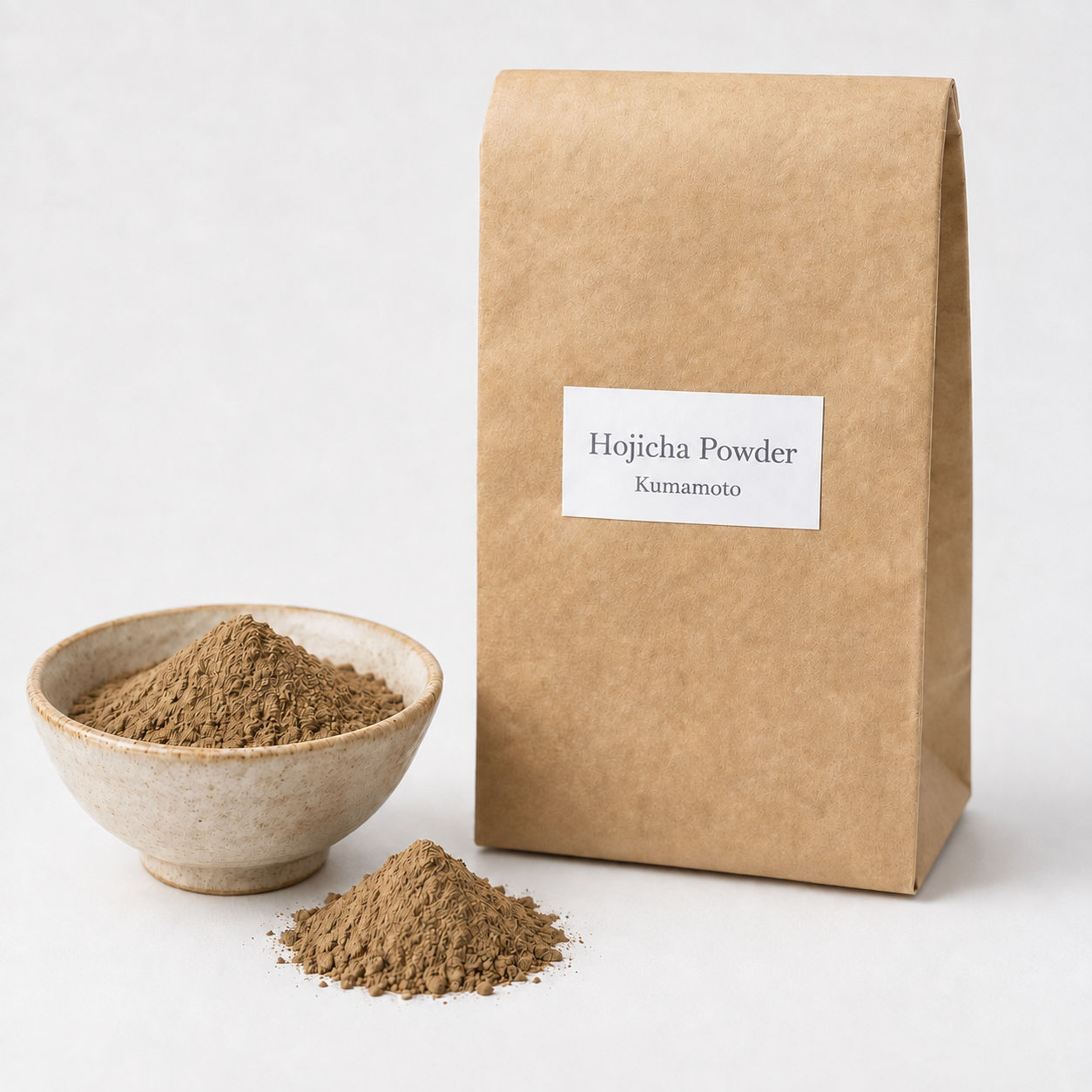
This hojicha powder is built on stronger raw tea. Instead of relying only on roasting to create interest, Sanrokuen uses Kumamoto first-harvest tea together with Kumamoto matcha raw material, then roasts and mills the tea in-house. The result is a hojicha powder with both aroma and substance.
Made from Kumamoto first-harvest tea and matcha raw material
The quality of hojicha powder depends not only on roasting, but also on the tea that is roasted. This product uses first-harvest Kumamoto tea as the base and also incorporates Kumamoto matcha raw material. That gives the powder a stronger umami foundation than ordinary low-grade roasting material.
The goal is not simply to produce a dark roast aroma. We want a hojicha powder that still tastes like tea underneath the roast: aromatic, full-bodied and satisfying in both drinks and food applications.
Using first-harvest tea helps create a cleaner and more substantial taste foundation.
Matcha raw material contributes extra body, umami and depth to the final hojicha powder.
Sanrokuen controls the roasting and powdering process directly to shape the intended aroma and taste.
In-house roasting creates aroma without losing strength
This tea is finished through Sanrokuen’s own roasting process, then milled into powder for business use. Because the raw tea already has a richer taste base, the finished hojicha powder can deliver not only fragrance but also a stronger impression on the palate.
That makes it suitable for applications where the tea needs to remain noticeable after milk, dairy fat, sugar, chocolate, flour or other ingredients are added.
Taste direction: good roasted aroma, strong underlying tea presence and a more powerful flavor than the Kagoshima hojicha powder, while still keeping the product balanced and pleasant.
Kumamoto vs Kagoshima hojicha powder
Two good hojicha powders, but with different personality.
Our Kagoshima hojicha powder is positioned as elegant, sweet and refined, especially because it is based on high-quality first-harvest tencha material. The Kumamoto hojicha powder also has a good aroma and taste, but compared with the Kagoshima version it shows a slightly stronger and more assertive taste profile.
| Comparison | Kagoshima Hojicha Powder | Kumamoto Hojicha Powder |
|---|---|---|
| Origin | Kagoshima | Kumamoto |
| Raw material direction | Elegant first-harvest material, sweeter profile | First-harvest base tea with Kumamoto matcha raw material |
| Aroma | Elegant, refined roasted aroma | Good roasted aroma with stronger tea presence |
| Taste | Softer, more refined | Slightly more powerful and full-bodied |
| Best positioning | Premium latte, desserts, refined hojicha menu | Latte, desserts and foods that benefit from stronger tea impact |
You can also compare with our existing Kagoshima Hojicha Powder page.
Product specifications
| Product name | Kumamoto Hojicha Powder |
|---|---|
| Category | Japanese hojicha powder / roasted green tea powder |
| Origin | Kumamoto Prefecture, Japan |
| Base tea | First-harvest Kumamoto tea |
| Additional raw material | Kumamoto matcha raw material |
| Processing | Roasted in-house and milled into powder by Sanrokuen |
| Flavor | Good roasted aroma, umami-rich taste, and slightly more power than the Kagoshima hojicha powder |
| Recommended applications | Hojicha latte, café beverages, ice cream, soft serve, cakes, cookies, chocolate, desserts, bakery products, sauces and food manufacturing. |
| Price | JPY 4,750/kg, reference EXW factory handover price. Final quotation depends on quantity, packaging, destination and current lot. |
| Storage | Store sealed in a cool, dry place away from heat, light, moisture and strong odors. After opening, reseal carefully and use as promptly as practical. |
| MOQ | 7 kg |
Final specification, lot details, packaging and price are confirmed at quotation. Tea is an agricultural product, so aroma and taste may vary slightly by lot.
Recommended uses and business applications
Hojicha latte
A strong candidate for hojicha latte because the taste remains noticeable even after milk is added.
Ice cream & soft serve
Useful where roasted aroma and deeper tea flavor are needed to remain recognizable in dairy desserts.
Cakes & confectionery
Suitable for sponge cake, cookies, cream, fillings, tiramisu, chocolates and hojicha-flavored sweets.
Bakery products
Useful in bread, pastry and baked goods where a stronger tea flavor is preferred over only a light aroma.
Restaurant & café menus
Good for businesses that want a roasted Japanese tea flavor with more body and intensity.
Food manufacturing
Can be evaluated for confectionery, desserts, creams, sauces and other processed foods using hojicha as a clear flavor element.
Learn more about Japanese hojicha
For a broader explanation of hojicha, roasting, flavor, caffeine and hojicha powder, please see Sanrokuen’s Hojicha Guide.
Related pages: What Is Hojicha Powder?, Kagoshima Hojicha Powder, Japanese Matcha & Tea Powder Wholesale, and Contact Sanrokuen.
For practical quality selection by raw material, harvest and use, see How to Choose Good Hojicha.
Wholesale price: JPY 4,750/kg. MOQ: 7 kg.
Kumamoto Hojicha Powder is offered at a reference wholesale price of JPY 4,750/kg, with a minimum order quantity of 7 kg. If you want a hojicha powder with good aroma, strong umami and a slightly more powerful taste profile, please contact us with your intended use, quantity, destination and packaging requirements.
Frequently asked questions
What makes this Kumamoto hojicha powder different?
It is made from Kumamoto first-harvest tea and Kumamoto matcha raw material, then roasted and powdered in-house by Sanrokuen. This gives the powder a stronger umami base, good aroma and a more powerful taste profile.
How is it different from the Kagoshima hojicha powder?
The Kagoshima version is positioned as more elegant and refined. The Kumamoto version still has good aroma and quality, but its taste is slightly stronger and more assertive.
Is it good for hojicha lattes?
Yes. Because it has a stronger underlying tea presence, it works well in milk-based beverages such as hojicha lattes.
What food applications are recommended?
It is suitable for café beverages, ice cream, cakes, bakery items, confectionery, chocolate, desserts and food manufacturing.
Can overseas buyers inquire?
Yes. Please tell us the destination country, intended use, expected quantity, packaging requirements and any required import documents. International freight and compliance costs are quoted separately.
What is the MOQ?
The minimum order quantity is 7 kg.
What is the wholesale price?
The reference wholesale price is JPY 4,750/kg, EXW factory handover. Final quotation may vary depending on packaging, quantity, destination and current lot.