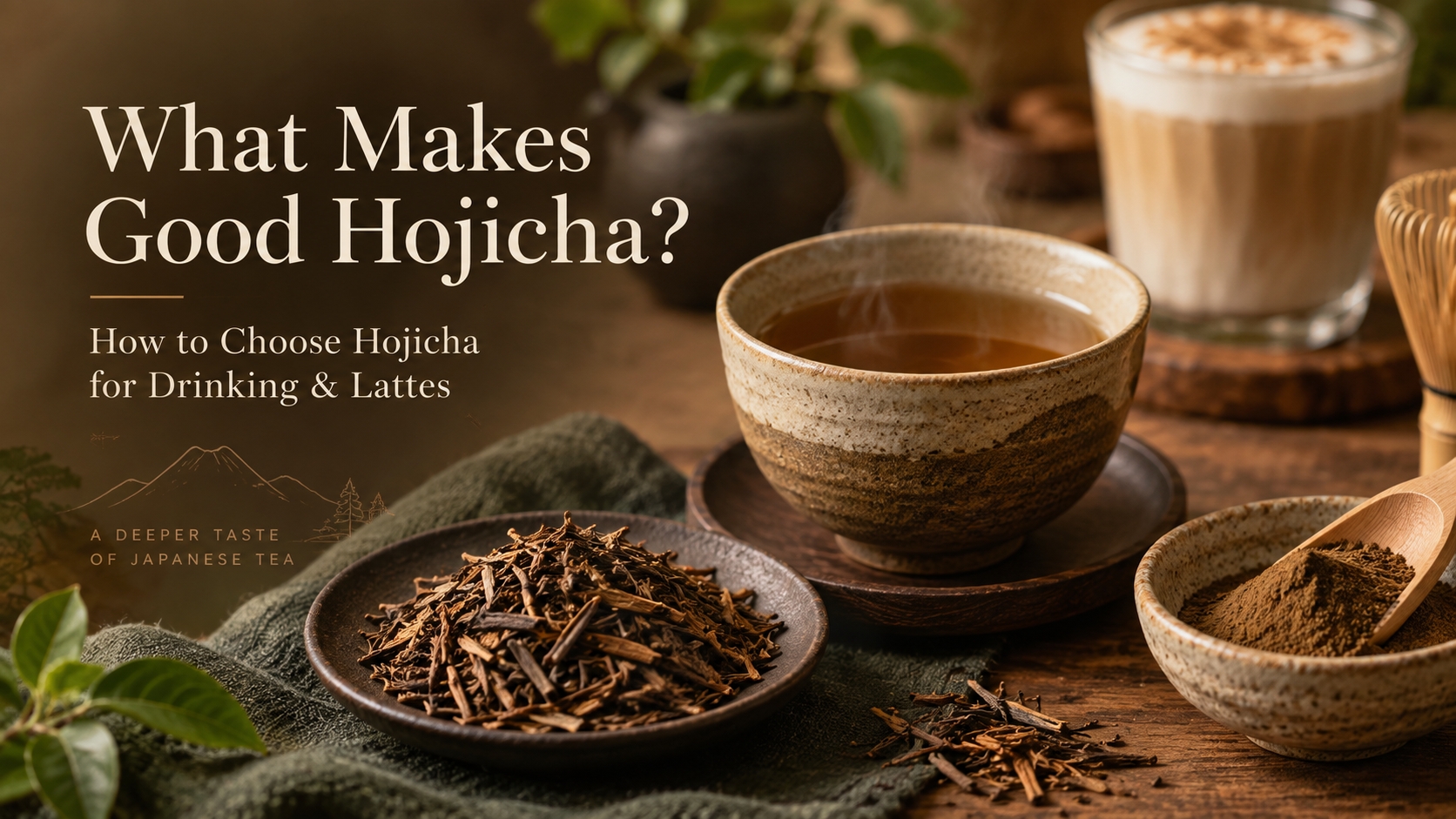
Sanrokuen's practical rule is simple: roasting can make ordinary tea much more enjoyable, but a flavorful raw tea can make an even more flavorful hojicha. This does not mean first-harvest hojicha is always the “correct” choice. A light, inexpensive hojicha can be ideal with meals. But when the tea must remain noticeable through milk, sugar, cream or dessert ingredients, the quality and strength of the raw tea become much more important.
High heat creates pyrazines and other aroma compounds associated with toasted, nutty and warm notes.
Roasting changes catechins and other taste components, often making the cup less bitter and astringent.
Economical mature material can become fragrant, light and very pleasant after roasting.
Richer raw tea can leave more sweetness, body and tea presence beneath the roasted aroma.
A latte needs enough aroma and body to remain recognizable after milk and sweetness are added.
Hojicha powder works in lattes, ice cream, cakes, cookies, chocolate and many other applications.
Why does hojicha smell so good?
Hojicha's aroma is created by roasting Japanese green tea at much stronger heat than ordinary tea finishing. The smell is not simply “burnt tea.” Heat drives chemical reactions that form new volatile compounds. Research on hojicha has repeatedly identified pyrazines as especially important contributors to its roasted aroma, together with furans, pyrroles and other compounds.
A classic Japanese study identified 66 aroma compounds in hojicha, including 21 pyrazines, and found that pyrazines increased significantly during roasting. Later work from Japanese tea researchers also identified 2-ethyl-3,5-dimethylpyrazine as a particularly important odorant in brewed hojicha.
What this means in the cup: roasting can create aromas that people describe as toasted, nutty, warm, sweet, grain-like or caramel-like. The exact aroma depends on raw material, roasting equipment, temperature, time and the skill of the producer.
More roasting is not automatically better. Heavy roasting can make the aroma stronger, but excessive heat can also push the tea toward burnt or harsh notes. Good hojicha therefore requires control, not simply maximum temperature.
Why does roasting reduce the bitter and astringent character of green tea?
One reason hojicha is so easy to drink is that roasting changes the chemical balance of the tea. Studies on roasted green tea and roasted stem tea show that catechins and amino acids decrease or change during high-temperature roasting, while roasted aroma compounds increase.
In practical sensory terms, this often means that tea which feels rough, bitter or strongly astringent before roasting becomes softer and easier to drink after roasting. Mature leaves and later-harvest tea can therefore gain a very different value as hojicha.
Tea-maker perspective: later-harvest leaves are usually larger and harder than first-harvest leaves. They may be less attractive as a delicate premium green tea, and their extraction can feel less refined. Roasting changes the aroma and taste dramatically, making this type of material much more enjoyable in a different style.
This is one of the great strengths of hojicha: roasting can transform economical tea material into a fragrant and useful product. That transformation is not a defect or a compromise—it is part of the traditional logic of hojicha.
What tea is usually used to make hojicha?
Hojicha can be made from several different Japanese green-tea materials. Common commercial products often use bancha, mature leaves, later-harvest tea or stems. These materials are generally less expensive than premium first-harvest leaf tea and respond well to roasting.
Because bancha is so common in hojicha, the names are sometimes treated as if they were the same. They are not. See Hojicha vs Bancha for a simple explanation of the relationship.
| Raw material | Why it is used | Typical character after roasting | Good fit |
|---|---|---|---|
| Bancha / mature leaves | Economical, widely available, suitable for strong roasting | Clear roasted aroma, lighter body | Everyday tea, restaurant service |
| Later-harvest green tea | Good cost-performance and stronger mature-leaf character | Roast can soften roughness and dominate the green-tea taste | Everyday hojicha, economical food use |
| Stems | Traditional roasted-tea material with distinctive aroma | Fragrant, often sweet and aromatic | Leaf tea, stem hojicha, premium regional styles |
| First-harvest tea | Used when more body, sweetness or tea flavor is desired | Roasted aroma with a richer tea foundation | Premium drinking, lattes, desserts |
| First-harvest tencha material | Shade-grown material can provide a strong umami-oriented base | Deep roast plus sweetness and tea presence | Premium hojicha powder, café applications |
The important point is that “made from bancha” does not mean bad hojicha. A lighter roasted tea can be excellent with Japanese food because it refreshes the palate without dominating the meal. Raw material should be judged according to the intended use.
Does better green tea make better hojicha?
In Sanrokuen's manufacturing experience, the answer is often yes—but “better” depends on the target product. Roasting can soften roughness and create strong aroma, but it does not erase every difference in the original tea. A raw material with more sweetness, body and umami can leave a richer foundation under the roast.
This is why we are interested in first-harvest hojicha. First-harvest tea generally costs more than later-harvest material, but it can produce a style in which roasted aroma and tea flavor coexist rather than the roast simply covering the underlying tea.
| Point | First-harvest hojicha | Later-harvest / bancha hojicha |
|---|---|---|
| Raw material cost | Higher | Lower |
| Roasted aroma | Strong when roasted appropriately | Strong when roasted appropriately |
| Underlying tea flavor | Often richer and more noticeable | Often lighter and more roast-led |
| Body in milk | Often stronger | May become lighter depending on the material |
| Everyday table tea | Good, but may be more expensive than necessary | Excellent cost-performance |
| Premium latte / dessert | Especially useful | Depends strongly on roast and concentration |
Our recommendation: if you mainly want an inexpensive, fragrant tea with meals, later-harvest hojicha can be ideal. If you want a richer hojicha for direct drinking, a premium café menu or a milk-heavy latte, it is worth paying more for first-harvest material.
Even then, first harvest is not a guarantee of quality. Roasting still has to suit the raw tea. A badly roasted first-harvest tea can be worse than a well-roasted bancha.
How to choose good hojicha for drinking
For straight drinking, start with the style you want rather than price alone. A premium raw material is not always necessary.
- For meals: choose a clean, aromatic hojicha that is not too heavy. Bancha or mature-leaf hojicha can work very well.
- For a richer cup: look for first-harvest tea, sencha-based hojicha or premium stem hojicha with more sweetness and body.
- For aroma: freshness after roasting matters. Hojicha's volatile aroma can fade with poor storage.
- For balance: good hojicha should smell roasted without simply tasting burnt.
- For origin or craftsmanship: look for information about raw tea, producer, roast style and harvest rather than relying only on the word “premium.”
How to choose hojicha for a latte
Hojicha for drinking and hojicha for a latte have different jobs. Milk is rich in fat, protein and sweetness, so a weak tea can disappear quickly.
Sanrokuen's rule for lattes: milk hides weak tea. We therefore prefer hojicha with enough aroma + body + underlying tea flavor to remain recognizable after milk is added.
A very strongly roasted inexpensive tea may smell powerful by itself, but a good latte also needs depth. When first-harvest material is roasted carefully, the finished drink can retain both roasted fragrance and a fuller tea taste.
What to check in a hojicha latte sample
- Does the aroma remain clear after milk is added?
- Is the tea flavor still identifiable, or does only a generic roasted note remain?
- Does the finish feel thin, harsh or burnt?
- Does the powder create enough body at a realistic café dosage?
- Can the product achieve the target flavor without using an uneconomically high amount of powder?
Hojicha powder can be used much like matcha
Traditional leaf hojicha is brewed and filtered. Hojicha powder is different: the roasted tea itself is finely milled, so it can be mixed directly into beverages and food.
This makes hojicha powder highly versatile. It can be used in many of the same practical applications as matcha:
- Hojicha latte and iced hojicha latte
- Ice cream and soft serve
- Cakes, chiffon cakes and sponge cakes
- Cookies and bakery products
- Chocolate, cream and fillings
- Pudding and other dairy desserts
- Commercial beverage bases and food manufacturing
A lower-cost alternative to matcha for some applications
For many café and food applications, hojicha powder can be a more economical Japanese tea ingredient than matcha. Matcha-grade tencha is expensive to produce because of shading, harvest and specialized processing. Hojicha can be made from a wider range of Japanese tea materials, which gives producers more flexibility in raw-material cost.
This does not make hojicha a “cheap substitute for matcha.” It is a different flavor category. But for cafés that already sell matcha latte, hojicha latte is a natural menu variation with a familiar Japanese-tea story and a very different toasted flavor.
Does hojicha have a relaxing effect?
Hojicha is often described as comforting or relaxing because of its warm roasted aroma. Scientific wording should be more careful than simply saying “pyrazine relaxes the body.”
A 2024 human study compared hot water, green tea and roasted green tea during repeated mental arithmetic tasks. The researchers reported that aromatic stimulation from Japanese tea beverages showed potential positive effects on refreshment, task performance and feelings of fatigue. The study included only 20 healthy young men, so it should not be treated as proof of a universal medical or therapeutic effect.
Reasonable conclusion: hojicha's roasted aroma is widely experienced as comforting, and human research suggests that Japanese tea aroma and consumption may support refreshment and reduced subjective fatigue. More research is needed before making stronger health claims.
Buyer checklist: how to choose hojicha or hojicha powder
| Check | Why it matters | What to ask |
|---|---|---|
| Harvest season | Influences raw-tea cost, sweetness, body and tea character | First harvest, second harvest, later harvest or autumn? |
| Leaf or stem | Can change aroma, sweetness, density and extraction | Leaf, stem or a blend? |
| Base tea | Sencha, bancha, tencha material and other teas behave differently | What tea was roasted? |
| Origin | Useful for traceability, storytelling and repeat sourcing | Which prefecture and producer? |
| Roast level | Changes aroma, bitterness, color and body | Light, medium or strong roast? Can it be customized? |
| Powder fineness | Affects mouthfeel and dispersion in lattes and food | How is it milled? What particle-size class is available? |
| Application | The best table hojicha may not be the best latte hojicha | Drinking, latte, bakery, ice cream or manufacturing? |
| Repeat supply | Important once a café or manufacturer finalizes a recipe | Can the supplier maintain the same raw material and roast direction? |
Sanrokuen's approach: start with flavorful tea, then roast it
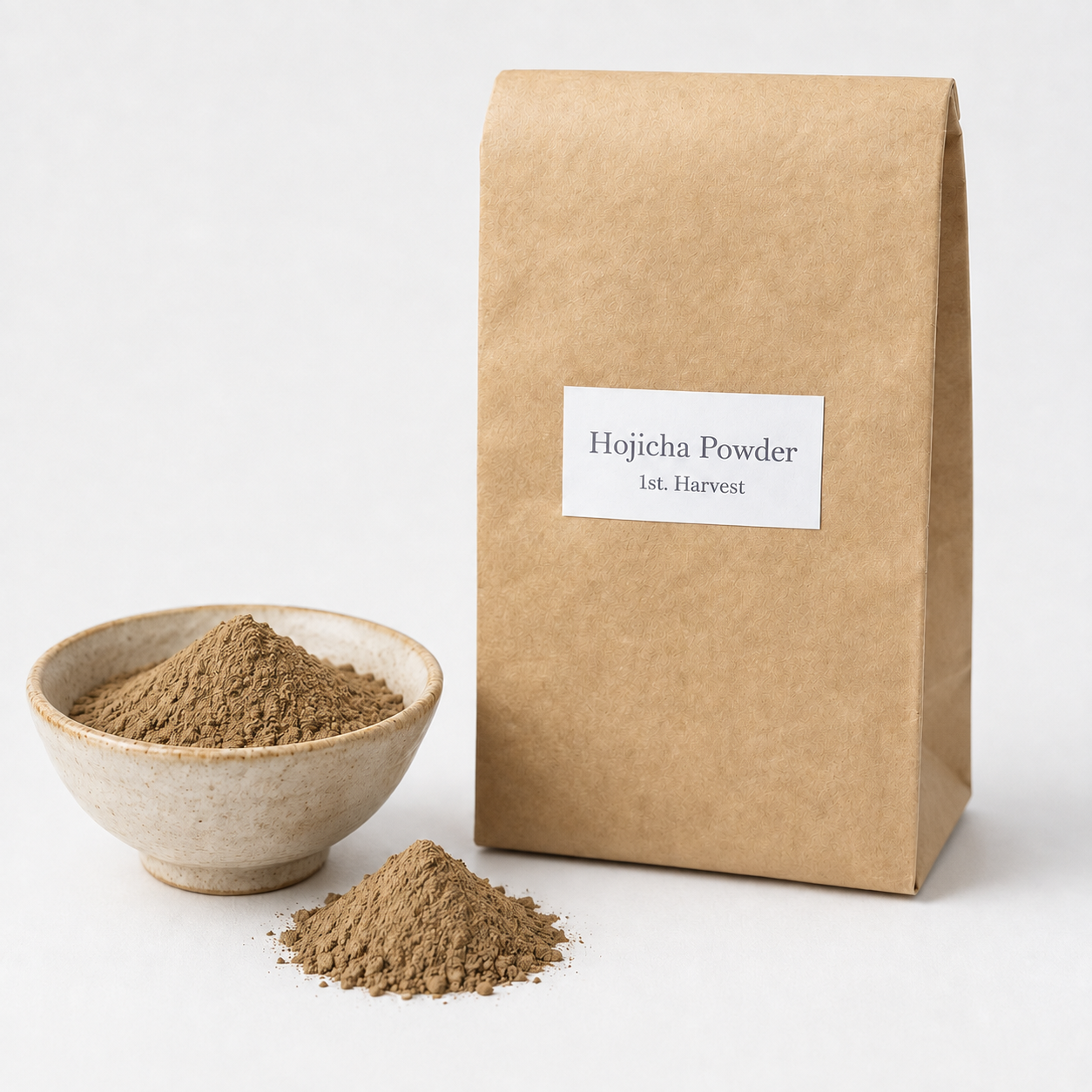
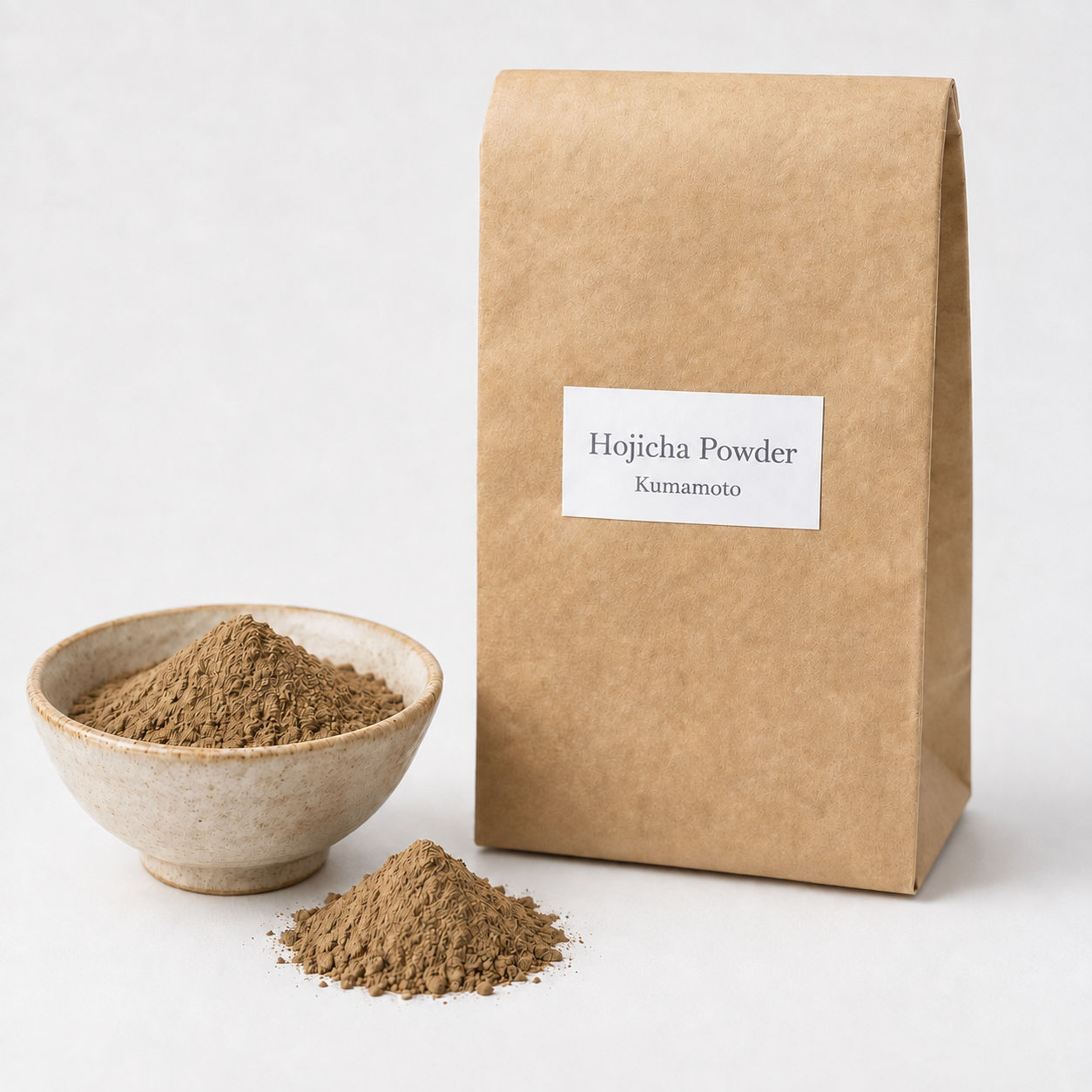
Sanrokuen manufactures hojicha powder in Kumamoto, Japan. Our approach for premium food and latte applications is to use a better raw-tea foundation rather than relying only on a very strong roast.
Our standard Kagoshima product uses first-harvest Organic JAS-certified tencha raw material. The raw material itself is Organic JAS certified, but because our roasting facility is not certified for Organic JAS processing, the finished hojicha powder is not sold as an Organic JAS-certified product.
We also produce a Kumamoto version using first-harvest tea and matcha raw material. Both products are intended to preserve enough tea character under the roast to work well in milk, desserts and food.
For more technical detail, see Sanrokuen's Hojicha Powder Wholesale page, What Is Hojicha? and What Is Hojicha Powder?.
Frequently asked questions
What makes hojicha high quality?
High-quality hojicha balances a pleasant roasted aroma with sweetness, body and a clean finish. The raw tea, roast profile, freshness and intended use all matter. Strong roasting alone does not guarantee quality.
Is hojicha always made from low-grade tea?
No. Bancha, mature leaves and later-harvest tea are commonly used because they are economical and roast well, but stems, sencha and first-harvest tea can also be used. Some premium hojicha styles deliberately use first-flush material.
Is first-harvest hojicha always better?
No. For light everyday drinking or tea served with meals, later-harvest hojicha can be excellent. First harvest becomes especially interesting when more sweetness, body and tea presence are wanted.
Why is hojicha less bitter than green tea?
Roasting changes catechins and other taste components while creating new roasted aroma compounds. In practice this often softens the bitterness and astringency of the original green tea.
What is the best hojicha for a latte?
Choose one with enough roasted aroma, body and underlying tea flavor to remain noticeable after milk is added. Sanrokuen generally prefers first-harvest raw material for premium latte applications.
Can hojicha powder be used like matcha?
Yes for many recipes. It can be whisked or blended into milk and used in ice cream, cakes, cookies, chocolate, cream and other foods. The practical use is similar, although hojicha has a brown color and roasted flavor rather than matcha's green color and fresh umami profile.
Is hojicha powder cheaper than matcha?
It often can be, especially in commercial food and café applications, because hojicha can use a wider range of Japanese tea raw materials. Exact prices depend on harvest, raw material, origin, roast, milling and order conditions.
Looking for hojicha powder for a café, latte or food product?
Sanrokuen supplies Japanese hojicha powder made from first-harvest tea and can discuss raw material, roast direction, milling, samples and commercial supply according to your application.
Sources and editorial basis
- Yamanishi T. et al. (1973), Aroma of Roasted Green Tea (Hoji-cha). Identified extensive pyrazine formation during roasting.
- Mizukami Y. (2012), Key Odorants in the Headspace above Infused Roasted Green Tea (Hojicha) and in the Infusion.
- Effects of Roasting Conditions on Roasted Stem Tea (2020). Reports changes in pyrazines, catechins and amino acids under different roasting conditions.
- Zhu Y.-M. et al. (2021), Roasting process shaping the chemical profile of roasted green tea.
- Kurosaka C. et al. (2024), Effects of green tea and roasted green tea on human responses.
- Sanrokuen: What Is Hojicha?
- Sanrokuen: What Is Hojicha Powder?
Statements identified as Sanrokuen's view are based on our tea purchasing, roasting, powder-processing and product-development experience. They should not be read as a claim that first-harvest material is always superior for every hojicha application.