Why Our Hojicha Starts with First-Harvest Tea
Many commercial hojicha products are made from bancha or later-harvest tea. That approach has practical advantages: it keeps costs down and creates a light roasted tea that can accompany delicate Japanese food without dominating the meal. Sanrokuen intentionally takes a different approach for hojicha powder.
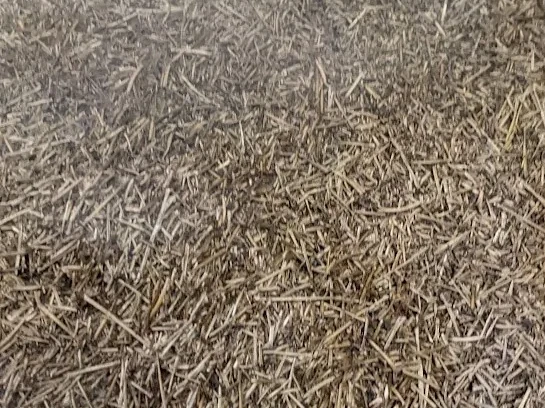
We use comparatively higher-value first-harvest tencha material so that the finished powder delivers not only a fragrant roasted character, but also noticeable sweetness and umami. This makes it especially suitable for hojicha latte, desserts, confectionery and applications where the flavor of the hojicha itself should be clearly present.
Organic JAS-Certified Raw Material — with Clear Labeling of the Finished Product
The tencha stem material we purchase for our standard hojicha powder has been graded and certified under Japan's Organic JAS system. In other words, the raw material itself is genuinely Organic JAS-certified.
We state this distinction clearly so buyers can accurately understand both the origin of the raw material and the certification status of the finished powder.

From Tencha to Hojicha Powder: Our In-House Process
Because Sanrokuen keeps the raw material in stock and completes the key processing steps in-house, we can control roast character, powder texture and production cost while responding flexibly to wholesale specifications.
Raw Material
Our standard product starts with 100% first-harvest Organic JAS-certified tencha stem material from Kagoshima.
Controlled Roasting
We roast in small batches while managing roasting temperature, exhaust temperature and discharge temperature for an even finish.
Coarse Grinding
After roasting, the tea is pre-ground into a coarse powder to prepare it for stable fine milling.
Fine Milling
Depending on the required specification, we use a cyclone mill or ball mill. Cyclone milling can produce an approximately 10 μm-class fine powder with a soft, smooth texture.


Sanrokuen Hojicha Powder vs. Conventional Commercial Hojicha
There is no single “correct” style of hojicha. Different raw materials serve different purposes. The table below explains the positioning of our standard hojicha powder compared with a common commercial approach.
| Point | Sanrokuen Standard Hojicha Powder | Common Commercial Approach |
|---|---|---|
| Raw material | 100% first-harvest Organic JAS-certified tencha stem material | Often bancha, third-harvest tea or autumn/winter tea |
| Flavor target | Roasted aroma plus sweetness and umami | Clean roasted aroma with a lighter tea taste |
| Typical strength | Flavor-forward applications where the hojicha itself should be noticeable | Economical table tea and foodservice where a lighter profile may be preferred |
| Roasting | Small-batch in-house roasting with controlled temperatures | Varies by producer |
| Milling | Cyclone mill or ball mill depending on specification | Varies by producer |
*The “common commercial approach” column describes general market practices and does not apply to every producer or product.
Custom Hojicha Powder Production
For custom orders, we can discuss adjustments to the roast profile and milling method according to the intended use, desired aroma, mouthfeel and order conditions.
Our standard product uses Kagoshima first-harvest tencha material, but we can also discuss alternative Japanese raw materials, including Kumamoto first-harvest tea, depending on availability and project requirements.
Because roasting and milling are handled in-house, we can work directly with importers, cafés, bakeries, beverage businesses and food manufacturers that need a Japanese hojicha powder with a clearly defined production story.
Wholesale & Bulk Hojicha Powder from Japan
Sanrokuen supplies Japanese hojicha powder for professional and commercial use. Large-volume production, including orders around 100 kg or more, can be discussed according to production schedule and specification.
Standard Wholesale Price
Price reference as of August 2026. Please contact us for current availability, lead time and a formal quotation.
Learn About Hojicha
New to roasted Japanese tea? These guides explain the category first, then connect the general knowledge to how Sanrokuen produces hojicha powder in Japan.
How to Choose Good Hojicha
What makes one hojicha better than another? Compare first-harvest tea, bancha, stems, roasting, body and the qualities that matter for drinking, lattes and desserts.
What Is Hojicha?
Learn what hojicha is, how roasting changes Japanese green tea, the role of bancha and stems, Kaga bocha, roasted aroma compounds, and why first-harvest hojicha tastes different.
What Is Hojicha Powder?
Learn how roasted tea becomes a fine powder for hojicha lattes, baking and desserts, and how raw material, roasting and particle size affect the finished ingredient.
Explore Japanese Tea Types
See where hojicha fits among sencha, gyokuro, matcha, kukicha and other Japanese teas. For practical preparation of leaf hojicha alongside sencha and gyokuro, see How to Brew Japanese Green Tea.
Hojicha vs Black Tea
Why do hojicha and black tea look similar but taste so different? Compare roasting vs oxidation, flavor, color, caffeine and milk pairing.
Hojicha vs Bancha
Learn why bancha is a common hojicha raw material, why not all hojicha is bancha, and how raw tea changes roasted flavor and body.
Recommended Applications
Hojicha Latte
First-harvest tea gives the roasted profile enough sweetness and depth to remain noticeable when combined with milk.
Ice Cream & Desserts
A fine powder can be blended into dairy, cream and dessert bases where both aroma and tea flavor are important.
Bakery & Confectionery
Suitable for cakes, cookies, chocolate, fillings and other applications that benefit from a clearly recognizable roasted tea flavor.
Beverage Bases
Fine milling supports easy dispersion when properly mixed into café and beverage formulations.
Food Manufacturing
Bulk production and specification discussions are available for commercial product development.
Custom Projects
Roast profile, milling method and Japanese raw material can be discussed according to the target product.
Hojicha Powder FAQ for Buyers
What is the main difference between Sanrokuen hojicha powder and ordinary hojicha powder?
Our standard hojicha powder is made from 100% first-harvest tencha material. We deliberately use a more flavorful spring tea raw material so the powder has sweetness and umami in addition to roasted aroma. Many commercial hojicha products instead use bancha or later-harvest tea for a lighter and more economical profile.
Is the finished hojicha powder Organic JAS certified?
No. The raw first-harvest tencha material is Organic JAS-certified, but our roasting facility is not certified for Organic JAS processing. Therefore, after roasting, the finished hojicha powder is not sold or labeled as an Organic JAS-certified product.
Where is the hojicha powder made?
The standard raw material is first-harvest tencha from Kagoshima, Japan. Sanrokuen performs roasting, pre-grinding and fine milling at our facility in Kumamoto, Japan.
How fine can you grind hojicha powder?
For applications requiring a very smooth texture, our cyclone mill can produce an approximately 10 μm-class fine powder. Depending on the project, ball milling can also be discussed.
Can the roasting level be customized?
Yes. For custom orders, roast profile adjustments can be discussed. We manage roasting temperature, exhaust temperature and discharge temperature during small-batch production.
Can you supply 100 kg or more?
Yes. Production at the 100 kg scale and above can be discussed. Final price, lead time and specification depend on order quantity, milling method, raw material and production schedule.
What is your wholesale price?
Our current standard reference price is JPY 5,000 per kilogram as of August 2026. Please contact us for a current formal quotation, especially for custom or large-volume orders.
Can you use Kumamoto tea instead of Kagoshima tea?
Yes, depending on availability and project conditions. Our standard product uses Kagoshima first-harvest tencha material, while custom production using Kumamoto first-harvest tea can also be discussed.
Looking for a Japanese Hojicha Powder Supplier?
Sanrokuen is a tea manufacturer in Kumamoto, Japan. We handle the important processing steps ourselves and can discuss wholesale hojicha powder for cafés, importers, bakeries, beverage brands and food manufacturers.
If you are looking for Japanese hojicha powder wholesale, bulk hojicha powder from Japan, a hojicha powder manufacturer, or a custom roasted tea powder for latte and food applications, please tell us your intended use, expected monthly volume and preferred specification.
Country / intended application / expected monthly volume / target roast profile / preferred milling method / desired first order quantity.