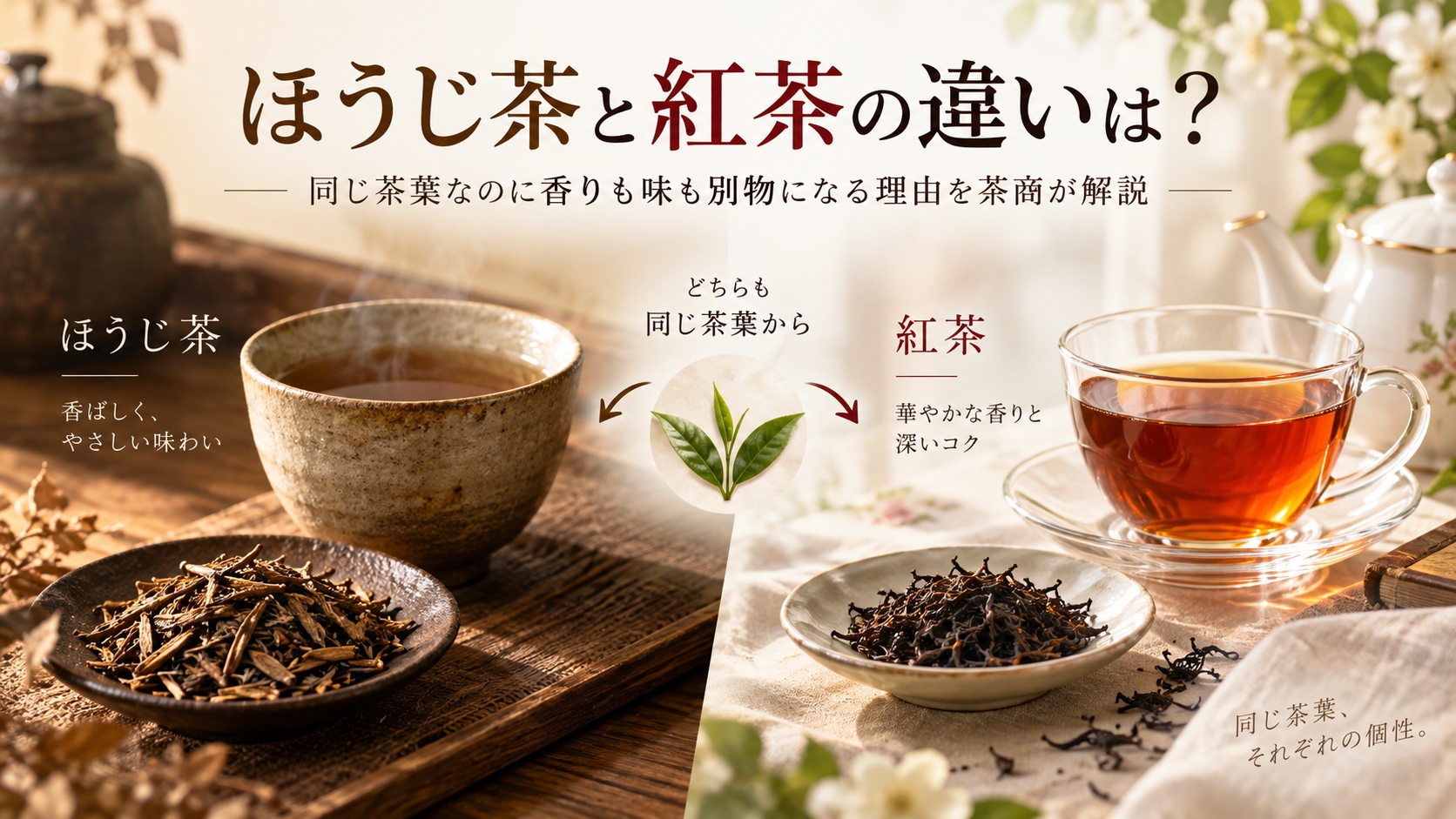
Put a cup of hojicha next to a cup of black tea and they may look like distant relatives: both can be brown or amber, both are usually brewed hot, and both can work surprisingly well with milk.
Yet the route from fresh tea leaf to finished cup is fundamentally different.
Hojicha builds its character mainly through roasting. Black tea builds its character mainly through oxidation.
That single distinction explains why hojicha suggests toast, roasted nuts, grain and caramel, while black tea may suggest flowers, ripe fruit, honey, malt or spice.
First surprise: they can come from the same tea plant
Hojicha and black tea do not have to come from different botanical species. Both can be made from the tea plant, Camellia sinensis.
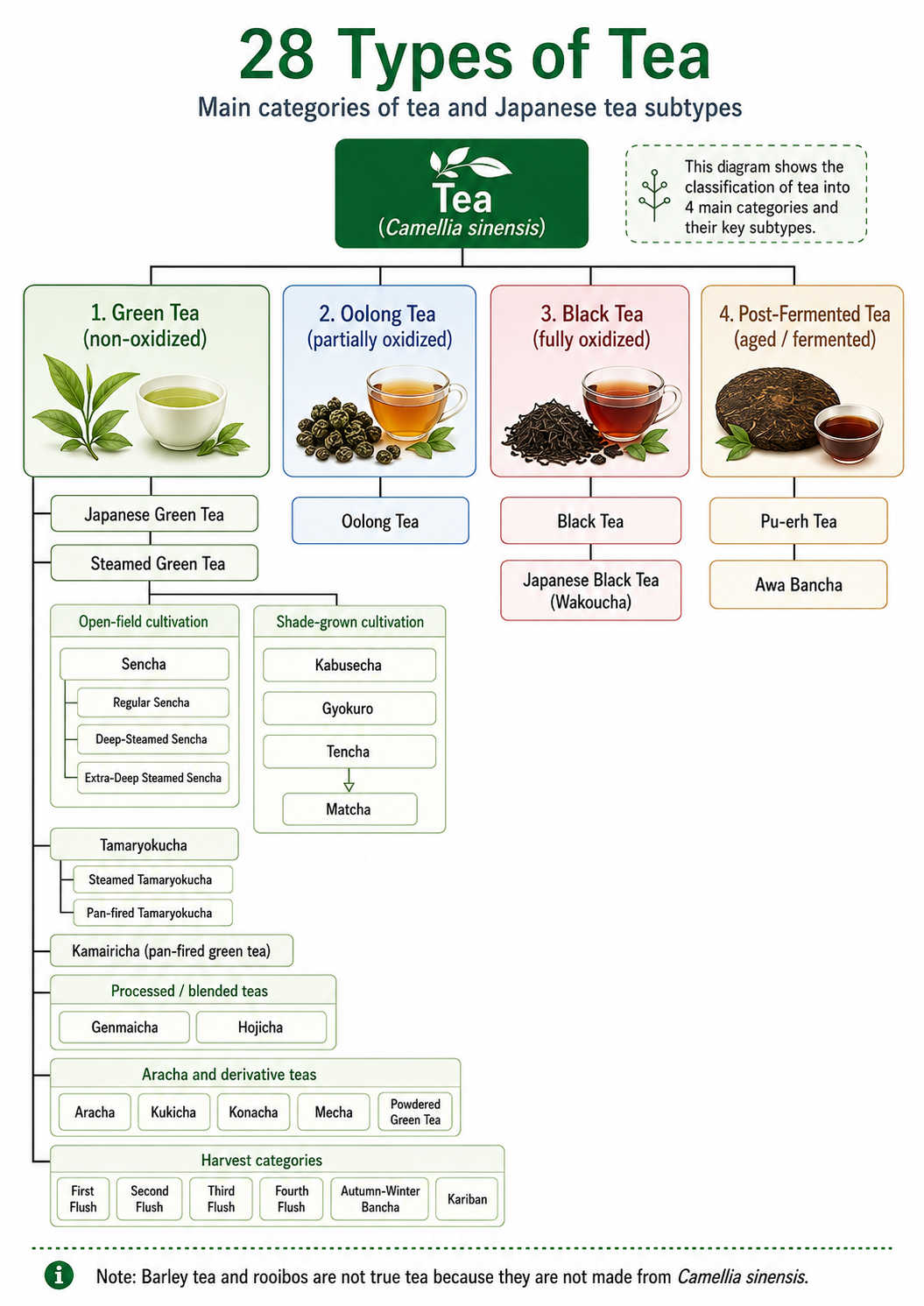
This is true not only for hojicha and black tea. Green tea, oolong tea and black tea can all begin with the same tea plant. What changes them into different tea categories is cultivation and, especially, processing after harvest.
For a broader English overview, see 28 Types of Japanese Tea, which explains how heating, oxidation, roasting and microbial fermentation create very different teas from the same plant.
Hojicha vs black tea at a glance
| Point | Hojicha | Black Tea |
|---|---|---|
| Basic identity | Roasted Japanese green tea | Extensively oxidized tea |
| Main transformation | Strong roasting after green-tea processing | Withering, rolling and oxidation before drying |
| Leaf color | Brown from roasting | Dark brown to black from oxidation and drying |
| Liquor | Golden brown to amber | Amber to reddish brown |
| Main aroma direction | Toasty, nutty, warm grain, caramel | Floral, fruity, honeyed, malty, spicy |
| Taste | Clean, roasted, generally softer in bitterness | Body, briskness, sweetness and astringency vary widely |
| Common milk style | Hojicha latte | Milk tea, chai |
| Typical hot-water range | 95–100°C / 203–212°F | 95–100°C / 203–212°F |
Hojicha starts as green tea—and is transformed by roasting
Hojicha is not a separate tea plant or cultivar. It is a style of Japanese green tea made by roasting already-processed green tea material.
The raw material may be sencha, bancha, stems or other green-tea material. Mature leaves and later-harvest tea are common because roasting can turn a stronger, rougher green-tea character into a fragrant and easy-drinking tea. First-harvest material can also be used when more sweetness, body and tea flavor are wanted underneath the roast.
For a closer look at one of hojicha’s most common raw materials, see Hojicha vs Bancha. Bancha can become hojicha, but hojicha can also be made from sencha, stems and first-harvest tea.
For a deeper explanation of raw materials, stems, bancha and first harvest, see What Is Hojicha?.
Green tea first, roasting later
Fresh leaves are heated early to stop substantial oxidation, processed as green tea, and later exposed to strong roasting heat.
Oxidation first, drying later
Fresh leaves are withered and rolled, allowing enzymatic oxidation to proceed extensively before final drying.
Black tea develops through oxidation
Black tea follows almost the opposite logic. Instead of stopping oxidation soon after harvest, producers intentionally allow it to progress.
A simplified sequence is:
Fresh leaf → withering → rolling → oxidation → drying
During oxidation, catechins are transformed into compounds including theaflavins and thearubigins. These contribute to black tea's red-brown liquor, briskness and characteristic flavor.
Tea terminology can be confusing here. Black tea is traditionally called “fully fermented tea” in Japanese and Chinese tea classification, but the main transformation is enzymatic oxidation, not the kind of microbial fermentation used for yogurt, miso or post-fermented tea.
Our English 28 Types of Tea guide explains this distinction. For a deeper article specifically about Japanese black tea, we currently link to our Japanese guide: 和紅茶とは?海外の紅茶にも負けない日本の紅茶の特徴と魅力.
Why does hojicha smell roasted while black tea smells floral or fruity?
Hojicha: heat creates new aromas
Strong roasting generates volatile compounds including pyrazines, furans and pyrroles. These help create toasted, nutty, warm-grain and caramel-like impressions.
Black tea: oxidation reshapes aroma
Withering, rolling and oxidation transform leaf chemistry and can create floral, fruity, honeyed, malty or spicy aromatic profiles depending on cultivar and manufacture.
Hojicha is therefore not simply “burnt tea.” Controlled roasting creates new aroma compounds, and the exact result changes with raw material, heat intensity and roasting time.
Sanrokuen's roasting experience: a 10°C difference can change the cup
We roast hojicha in-house in Kumamoto. On one of our roasting systems, we have used a machine-side setting of 300°C while monitoring the actual tea discharge temperature rather than treating the machine setting as the leaf temperature itself.
In our own trials, tea discharged at around 180°C developed a much stronger roasted aroma. Around 170°C, the roast was gentler and more of the underlying green-tea character remained.
That difference is one reason we do not think of hojicha as simply “tea roasted as hot as possible.” The right roast depends on what the finished tea is supposed to do.
If you want to see our original Japanese manufacturing records and roasting equipment, these older production notes remain available:
- Actual hojicha roasting with Sanrokuen's drum roaster (Japanese)
- Our first-harvest hojicha soft-serve production trial (Japanese)
For current English guidance on choosing raw material and roast level, see How to Choose Good Hojicha.
Why are both brown if the processes are different?
This is one reason people sometimes assume hojicha is a kind of black tea. Both can look brown, but they get there by different routes.
Hojicha turns brown mainly because roasting changes the already-processed green tea.
Black tea turns dark because extensive oxidation changes leaf chemistry before the final drying stage.
So similar color does not mean the same tea category.

Flavor: roasted clarity vs aromatic body
Hojicha
Hojicha usually leads with roast: toasted grain, nuts, caramel, wood or warm cereal notes. Strong roasting also reduces much of the fresh-green aroma associated with sencha.
Everyday hojicha made from mature tea or stems can be light, clean and very easy to pair with meals. First-harvest hojicha can be richer, with more sweetness and body underneath the roast.
Black tea
Black tea spans a much wider aromatic spectrum: Darjeeling can be floral or muscatel, Assam may be malty and full-bodied, and Japanese wakoucha often has a softer sweetness and gentler astringency.
For black tea, cultivar, growing region, withering, rolling and oxidation all strongly affect the cup.
Which has more caffeine?
Hojicha is sometimes described as “caffeine-free,” but that is not correct. It still contains caffeine.
Japanese standard food-composition data commonly cited by the Ministry of Agriculture, Forestry and Fisheries list:
| Beverage | Caffeine in brewed tea |
|---|---|
| Hojicha | 20 mg / 100 ml |
| Black tea | 30 mg / 100 ml |
However, these numbers should not be read as a universal 2:3 ratio. The standard preparation conditions are different, and actual caffeine varies with raw material, harvest, leaf amount, water temperature and steeping time.
For practical brewing-temperature guidance, see our English Water Temperature Guide, which includes both hojicha and Japanese black tea.
Which is better with milk?
Both—just for different reasons.
Hojicha latte
Hojicha works with dairy because warm roast aromas complement milk, cream, caramel, chocolate and brown sugar. A good hojicha latte needs enough tea character to remain recognizable after milk is added.
This is why Sanrokuen uses first-harvest material for our standard hojicha powder: we want more than roast aroma alone. We want enough sweetness, body and tea flavor to remain present in a latte or dessert.
See What Is Hojicha Powder? for latte, baking and dessert applications, or our Hojicha Powder Wholesale page for commercial specifications.
Milk tea
Black tea pairs with milk through a different structure: aroma, briskness, tannin-derived astringency and body. Assam and other powerful black teas remain noticeable even after milk and sugar are added, which is why they are common in milk tea and chai.
Which works better with food?
Hojicha is especially useful with Japanese meals because a light roasted tea can be fragrant without competing aggressively with delicate flavors such as dashi, fish or vegetables.
Black tea is often associated with cakes, baked goods, sandwiches, chocolate and fruit, although lighter Japanese black teas can also work surprisingly well with meals.
Neither is universally better. The best choice depends on the food and the role you want the tea to play.
One important similarity: both like hot water
Although their processing is very different, hojicha and black tea share a practical similarity: both are generally brewed with hot water.
| Tea | Starting temperature | Typical time |
|---|---|---|
| Hojicha | 95–100°C / 203–212°F | 30–60 seconds |
| Japanese black tea | 95–100°C / 203–212°F | 2–4 minutes |
Hojicha benefits from high temperature because hot water quickly releases the roasted aroma. Black tea also normally needs near-boiling water to extract sufficient aroma, color and body.
Could the same cultivar become both hojicha and black tea?
Yes.
Take a Japanese cultivar such as Yabukita. If the leaves are processed as green tea and later roasted, they can become Yabukita hojicha. If fresh Yabukita leaves are withered, rolled and oxidized, they can become Japanese black tea.
This is one of the most interesting lessons in tea: cultivar matters, but processing can change the identity of the finished tea even more dramatically.
Which should you choose?
| If you want... | Try... |
|---|---|
| Warm toasted aroma | Hojicha |
| Floral or fruity aroma | Black tea |
| A clean tea with Japanese meals | Light hojicha |
| A roasted milk drink | Hojicha latte |
| Classic milk tea or chai | Black tea |
| Roasted tea for desserts | Hojicha powder |
| Bright reddish liquor and briskness | Black tea |
Frequently asked questions
Is hojicha a type of black tea?
No. Hojicha is roasted Japanese green tea. Black tea is a separate tea category produced through extensive enzymatic oxidation.
Why does hojicha look brown if it is green tea?
Because high-temperature roasting changes the color of the already-processed green tea from green to brown.
Can hojicha and black tea use the same cultivar?
Yes. The same tea cultivar can be processed in different ways. Japanese green-tea cultivars such as Yabukita can also be made into black tea.
Which has less caffeine?
Japanese standard composition data list brewed hojicha at 20 mg/100 ml and black tea at 30 mg/100 ml, but preparation conditions differ and actual products vary.
Which is less bitter?
Hojicha often feels softer in bitterness and astringency because roasting changes many green-tea taste and aroma components. Black tea varies widely by cultivar, origin and brewing method.
Which is better for a latte?
Both can work well. Hojicha gives a roasted, nutty latte, while black tea gives a more traditional milk-tea profile. For hojicha latte, choose a powder with enough body and tea flavor to remain noticeable through milk.
Summary: the same tea plant can become two completely different drinks
Hojicha and black tea can both begin with Camellia sinensis, but they are transformed in very different ways.
Hojicha = green tea + roasting.
Black tea = withering + rolling + extensive oxidation + drying.
Roasting gives hojicha its warm toasted aroma and brown color. Oxidation gives black tea its reddish liquor, briskness and wide range of floral, fruity, honeyed and malty aromas.
Once you understand that difference, hojicha stops looking like “a brown tea similar to black tea.” It becomes easier to see it for what it really is: a roasted expression of Japanese green tea.
And that is also why hojicha is such an interesting category for Sanrokuen. By changing the raw tea and roast profile, we can design a light tea for meals, a richer tea for drinking, or a powerful powder for lattes and desserts.
Related Sanrokuen guides
Sources and further reading
- Ministry of Agriculture, Forestry and Fisheries of Japan — tea categories and processing
- Tea Research Journal — aroma compounds involved in hojicha
- Ministry of Agriculture, Forestry and Fisheries of Japan — caffeine information and Japanese food-composition values
- Sanrokuen — What Is Hojicha?
- Sanrokuen — 28 Types of Japanese Tea