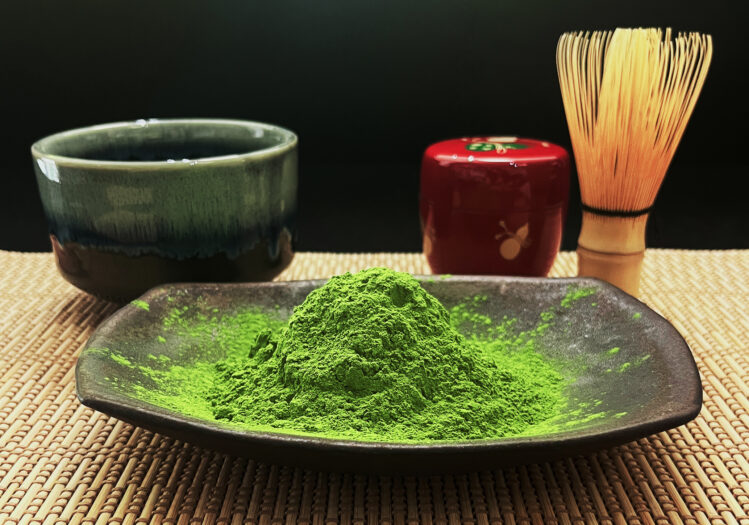
Matcha is often described simply as powdered green tea, but nutritionally it differs from a normal cup of brewed green tea in one important way: you consume the tea leaf itself.
With brewed sencha or other leaf teas, hot water extracts part of the tea's water-soluble components and the leaves are normally discarded. With matcha, finely ground tea leaves are dispersed in water and consumed. This means matcha can provide not only compounds that readily dissolve in water, but also components that remain in the leaf.
Among the compounds most often discussed in matcha are L-theanine, catechins such as EGCG, caffeine, dietary fiber, chlorophyll, vitamins and minerals. Their concentrations are not fixed: cultivar, shading, harvest season, leaf maturity, growing conditions, processing and storage can all change the final composition.
What nutrients are found in matcha?
Matcha is made by finely grinding processed tea leaves. Traditional Japanese matcha is produced from tencha, a shade-grown tea material that is steamed, dried without the rolling process used for sencha, refined and milled.
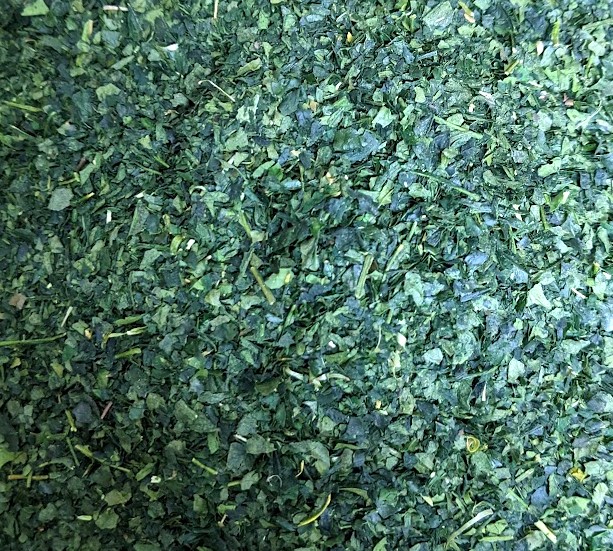
Major nutrients and naturally occurring compounds found in matcha include:
- L-theanine and other amino acids
- Catechins, including EGCG, EGC, ECG and EC
- Caffeine
- Dietary fiber
- Carotenoids, including beta-carotene equivalents
- Vitamin E
- Vitamin K
- Vitamin C
- Folate
- Potassium
- Calcium
- Magnesium
- Iron and zinc
- Chlorophyll and other plant compounds
Matcha nutrition per 100 g and per 2 g serving
Japan's Ministry of Education, Culture, Sports, Science and Technology (MEXT) publishes nutritional values for matcha in the Standard Tables of Food Composition in Japan. These values are useful as a reference for dry matcha powder.
However, a normal serving is far smaller than 100 g. The table below therefore shows both the official value per 100 g and the approximate amount in a 2 g serving.
| Nutrient | Per 100 g | Approx. per 2 g |
|---|---|---|
| Energy | 237 kcal | 4.7 kcal |
| Protein | 29.6 g | 0.59 g |
| Dietary fiber | 38.5 g | 0.77 g |
| Potassium | 2,700 mg | 54 mg |
| Calcium | 420 mg | 8.4 mg |
| Magnesium | 230 mg | 4.6 mg |
| Phosphorus | 350 mg | 7.0 mg |
| Iron | 17.0 mg | 0.34 mg |
| Zinc | 6.3 mg | 0.13 mg |
| Beta-carotene equivalent | 29,000 μg | 580 μg |
| Vitamin E (α-tocopherol) | 28.0 mg | 0.56 mg |
| Vitamin K | 2,900 μg | 58 μg |
| Folate | 1,200 μg | 24 μg |
| Vitamin C | 60 mg | 1.2 mg |
Source: MEXT, Standard Tables of Food Composition in Japan (Eighth Revised Edition, Supplement 2023), food no. 16035, “Maccha (finely ground tea).” The 2 g column is calculated from the official 100 g values. Individual products can differ.
Per-100-gram values are useful when comparing foods analytically, but they can be misleading if treated as a normal serving. A bowl or drink commonly uses only around 1–2 g of matcha, although recipes and café drinks may use more.
L-Theanine in matcha
L-theanine is an amino acid naturally present in Camellia sinensis. It is closely associated with the mellow, umami-rich character valued in high-quality Japanese green tea.
Tea intended for matcha production is shaded before harvest. Shading changes leaf metabolism and is associated with higher theanine and chlorophyll and with changes in catechin formation. This is one reason shade-grown tea can taste softer and more umami-rich than strongly sun-exposed tea.
L-theanine has been studied in relation to attention, cognitive performance, stress and relaxation. A 2026 systematic review and meta-analysis covering 31 randomized controlled trials reported a robust short-term effect on choice reaction time after a 200 mg single dose, while effects on acute stress were modest and the authors emphasized uncertainty around the clinical relevance of several outcomes.
L-Theanine and caffeine: a characteristic combination
Matcha naturally contains both L-theanine and caffeine. Caffeine is associated with alertness and stimulation, while L-theanine has been investigated for attention and stress-related outcomes.
The combination has attracted scientific interest because tea does not deliver either compound in isolation. Even so, the amount and ratio vary from tea to tea, so it is not accurate to assume that every matcha produces the same chemical profile.
Catechins and EGCG in matcha
Green tea contains polyphenols known as catechins. Four major catechins commonly discussed in tea research are:
- EGCG — epigallocatechin gallate
- EGC — epigallocatechin
- ECG — epicatechin gallate
- EC — epicatechin
Among them, EGCG has received especially strong research attention. Catechins have antioxidant activity and are studied in relation to oxidative stress, metabolism, cardiovascular health, inflammatory processes and other areas.
That does not mean that drinking matcha has been proven to prevent or treat a specific disease. Laboratory antioxidant activity, observational research, animal studies and human clinical outcomes are different levels of evidence and should not be treated as interchangeable.
Does matcha always have more EGCG than other green teas?
Not necessarily.
This is one of the most useful points to understand about matcha nutrition. Traditional matcha is produced from young, shaded tea leaves. Shading supports the qualities desired for matcha, including amino acids, chlorophyll, green color and umami, but it also changes catechin metabolism.
Later-harvest or more sun-exposed green tea can show a different balance, including higher levels of tannins and catechin-related compounds in some cases. Therefore, the most expensive or highest sensory grade is not automatically the tea with the highest amount of every compound of nutritional interest.
There is no single “best” chemical profile for every purpose. A tea selected for high umami and L-theanine can be chemically different from a tea selected for stronger astringency and catechin-related characteristics.
Harvest season can significantly change the chemical profile of Japanese green tea. In our 2026 laboratory analysis, first-harvest matcha contained much more L-theanine and free amino acids, while third-harvest powdered green tea contained much more tannins and fiber. Read our full comparison of first-harvest matcha and third-harvest green tea.
How much caffeine is in matcha?
Matcha naturally contains caffeine. A scientific review reported matcha caffeine concentrations of approximately 18.9–44.4 mg per gram among analyzed samples.
Using that published range, a 2 g serving would contain approximately 38–89 mg of caffeine.
| Matcha powder | Estimated caffeine using 18.9–44.4 mg/g range |
|---|---|
| 1 g | 19–44 mg |
| 1.5 g | 28–67 mg |
| 2 g | 38–89 mg |
| 3 g | 57–133 mg |
These are estimates from a published range, not guaranteed values for every product. Cultivar, harvest, leaf age, cultivation and product formulation can change caffeine concentration.
Because the powder itself is consumed, the caffeine contained in the portion used is also consumed rather than only partially extracted into an infusion.
Vitamins in matcha
Vitamin C
The Japanese food composition tables list approximately 60 mg of vitamin C per 100 g of dry matcha, equivalent to about 1.2 mg in 2 g.
This is a good example of why serving size matters. Matcha contains vitamin C, but a normal serving should not be presented as a major source simply by quoting the 100 g figure.
Vitamin E
MEXT lists 28.0 mg of α-tocopherol per 100 g, equivalent to approximately 0.56 mg per 2 g. Vitamin E is fat-soluble, and consuming the whole powdered leaf differs from drinking only a filtered tea infusion.
Vitamin K
MEXT lists approximately 2,900 μg of vitamin K per 100 g, or around 58 μg per 2 g. People whose medication requires controlled vitamin K intake should follow advice from their physician or pharmacist.
Beta-carotene
The official Japanese table lists a beta-carotene equivalent of approximately 29,000 μg per 100 g, corresponding to about 580 μg in 2 g.
Dietary fiber and minerals in matcha
One clear difference between powdered matcha and ordinary brewed tea is dietary fiber. MEXT lists 38.5 g of dietary fiber per 100 g of dry matcha, or approximately 0.77 g per 2 g serving.
In normal leaf-tea preparation, most fiber stays in the leaves and is discarded. With matcha, the leaf particles themselves are consumed.
Matcha also contains minerals including potassium, calcium, magnesium, phosphorus, iron and zinc. Again, the dry powder can look highly concentrated per 100 g, but actual intake should be considered at a realistic serving size.
Matcha vs brewed green tea: why the whole leaf matters
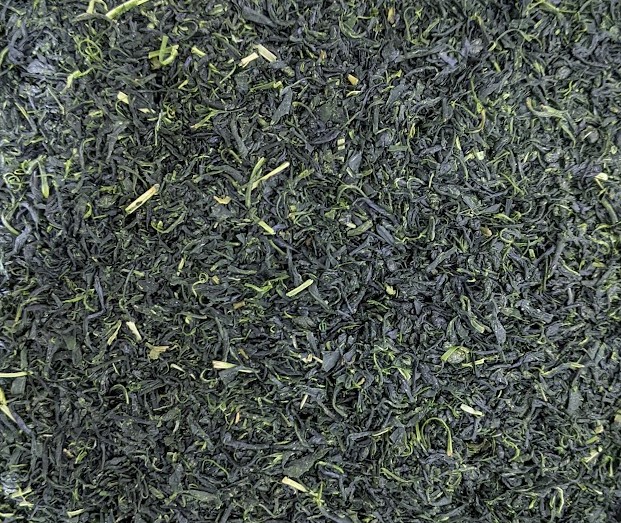
Matcha
The finely powdered tea leaf is consumed. Both water-soluble compounds and components retained in the leaf can be ingested.
Brewed green tea
Hot water extracts part of the leaf's soluble compounds. The brewed leaves, including most of their fiber, are usually discarded.
This does not mean that matcha is automatically “better” in every nutritional respect. Brewed green tea and matcha are different ways of consuming the same tea plant, and their practical intake patterns are different.
For a broader explanation of cultivation and processing, see our guide to Japanese tea types and our Japanese matcha guide.
Does the quality of matcha change its nutrition?
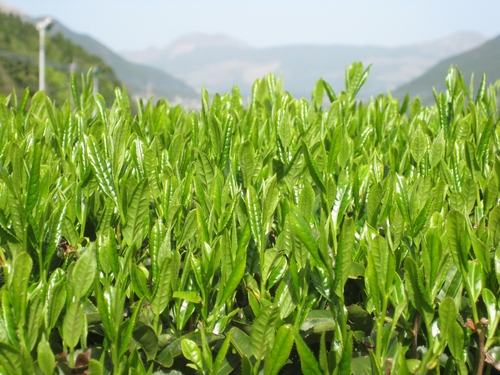
Yes. Matcha is an agricultural product, and chemical composition varies.
Important variables include:
- cultivar
- first, second or later harvest
- duration and degree of shading
- sunlight and temperature
- fertilization and soil conditions
- rainfall and weather
- leaf maturity
- processing and refining
- milling
- storage conditions
This is why Sanrokuen uses component analysis alongside sensory evaluation when comparing selected tea lots. Numbers do not replace tasting, but they can help explain why one tea has more umami, why another is more astringent, and why different raw materials suit different uses.
See our Kumamoto Matcha Component Analysis for an example of how we use real analytical data to evaluate Japanese matcha materials.
Is more expensive matcha always healthier?
No. Price, sensory grade and concentration of a particular compound are not the same thing.
Premium first-harvest matcha is often valued for high amino acids, strong umami, lower astringency, vivid color, aroma and mouthfeel. A later-harvest tea may contain fewer amino acids while showing higher tannin or catechin-related values.
Therefore, instead of asking only “Which matcha is healthiest?”, a more useful question can be:
- Are you interested in L-theanine and amino-acid-rich tea?
- Are you interested in catechins and a more astringent tea profile?
- Are you choosing matcha for direct drinking, latte use or food applications?
- How much powder do you realistically consume?
First Harvest vs Third Harvest Green Tea: How L-Theanine and Tannins Change →
How much matcha is a serving?
A practical serving is often around 1–2 g of matcha powder, although preparation varies. Café drinks, stronger bowls and culinary recipes may use more.
This matters particularly for caffeine. Using twice as much powder generally means consuming roughly twice as much caffeine from that same matcha.
People who are pregnant, sensitive to caffeine, taking medication, or managing a health condition should follow appropriate professional dietary guidance.
Matcha is more than one ingredient
Matcha is sometimes discussed as though it were simply “EGCG” or “L-theanine.” In reality, it is a complex agricultural food containing many compounds at the same time.
Its character reflects the balance among amino acids, catechins, caffeine, fiber, vitamins, minerals, pigments and many other naturally occurring substances. That balance changes with the tea plant, field, harvest and processing.
For this reason, understanding matcha nutrition requires more than repeating an average nutrient value. It requires looking at what was grown, when it was harvested, how it was cultivated and what the actual tea contains.
Frequently asked questions about matcha nutrition
What nutrients are in matcha?
Matcha contains L-theanine and other amino acids, catechins such as EGCG, caffeine, dietary fiber, carotenoids, vitamins including E, K and C, and minerals such as potassium, calcium and magnesium. The actual amounts vary by tea.
Does matcha contain L-theanine?
Yes. L-theanine is a naturally occurring tea amino acid associated with umami. Cultivar, shading, harvest season and leaf maturity can substantially affect its concentration.
Does matcha contain EGCG?
Yes. EGCG is one of the major catechins found in green tea and matcha. Matcha also contains EGC, ECG and EC. The exact catechin profile varies by cultivation and raw material.
How much caffeine is in matcha?
A scientific review reported approximately 18.9–44.4 mg of caffeine per gram of matcha across analyzed samples. That would correspond to roughly 38–89 mg for 2 g of powder, although individual products may fall outside that range.
Is matcha healthier than regular green tea?
They are consumed differently. Matcha involves consuming the powdered leaf, while ordinary green tea is usually an infusion with the leaves removed. This gives them different nutritional characteristics, but “healthier” depends on the compound, serving size and context being considered.
References
- Ministry of Education, Culture, Sports, Science and Technology (MEXT), Japan. Standard Tables of Food Composition in Japan (Eighth Revised Edition, Supplement 2023). Food no. 16035: Maccha (finely ground tea). Japanese Food Composition Database.
- Kochman J, Jakubczyk K, Antoniewicz J, Mruk H, Janda K. Health Benefits and Chemical Composition of Matcha Green Tea: A Review. Molecules. 2021;26(1):85. DOI: 10.3390/molecules26010085. PubMed.
- Gerolymos C, Saddier E, Boyer L, Fond G. Cognitive and affective effects of L-Theanine: a systematic review and meta-analysis of 31 randomized trials. Molecular Psychiatry. Published July 6, 2026. DOI: 10.1038/s41380-026-03727-9. PubMed.
- Phuah YQ, et al. A review on matcha: Chemical composition, health benefits, with insights on its quality control by applying chemometrics and multi-omics. Food Research International. 2023;170:113007. DOI: 10.1016/j.foodres.2023.113007. PubMed.
- Hu S, et al. A comprehensive review of matcha: production, food application, potential health benefits, and gastrointestinal fate of main phenolics. Food & Function. 2023. PubMed.
Educational information only. This page explains food composition and scientific research and is not intended to diagnose, treat, cure or prevent disease. Nutrient and bioactive-compound concentrations vary among tea products, and findings from isolated-compound or supplement studies should not automatically be applied to a normal serving of matcha.