JAPANESE TEA GUIDE
Matcha vs Green Tea: How Sencha, Kabusecha, Gyokuro and Tencha Are Really Different
Matcha and ordinary Japanese green tea come from the same tea plant, Camellia sinensis. The difference begins before harvest—especially with sunlight and shading—and continues after harvest through steaming, rolling, drying, refining and grinding.
Contents
1. They All Begin With the Same Tea Plant
Sencha, kabusecha, gyokuro, tencha and matcha are not different botanical species. They can all be made from Camellia sinensis. Cultivar matters—Japanese cultivars such as Yabukita, Saemidori, Okumidori and Seimei can differ in color, aroma and taste—but the category of tea is determined mainly by how the plant is cultivated and how the harvested leaves are processed.
This is one reason the phrase “matcha leaf” can be misleading. A leaf does not become matcha merely because it is a certain cultivar. The same cultivar can be grown and manufactured in different ways. What matters is the combination of field management, shading, harvest timing and tencha processing.
2. The Biggest Difference Begins Before Harvest: Sunlight
A useful way to understand Japanese green tea is to think of shading as a continuum rather than a simple yes-or-no switch. At one end is tea grown in open sunlight. As shading becomes longer and stronger, the leaf changes in ways that affect color, taste, aroma and chemical composition.
There is no single worldwide rule saying that a tea becomes kabusecha on day X and gyokuro on day Y. Production standards, shading materials and regional practices differ. As a practical guide, kabusecha is commonly shaded for a shorter period—often around one to two weeks—while high-grade gyokuro is associated with more intensive and longer covering. Japan's Ministry of Agriculture, Forestry and Fisheries (MAFF), for example, describes traditional Uji gyokuro as being shaded for more than 20 days. [1]
3. How Shading Changes Tea-Leaf Chemistry
Shading changes the plant's metabolism. That is why shade-grown tea is not simply a darker-looking version of ordinary green tea. Research on shaded tea plants generally finds changes in several compounds that directly influence sensory quality. The exact numbers vary by cultivar, season, fertilizer management, shade intensity and harvest timing.
Theanine & free amino acids
Shade-grown leaves tend to retain or accumulate more free amino acids, including theanine. These compounds are strongly associated with the savory, brothy umami character prized in gyokuro and high-quality matcha.
Catechins
Exposure to sunlight favors pathways associated with catechin accumulation. Under shading, total catechin levels often become lower relative to comparable sun-grown shoots, which can reduce the sharp bitterness and astringency associated with catechins.
Chlorophyll
Tea plants adapt to reduced light by increasing pigments used for light capture. Shade-grown leaves therefore tend to become a deeper green, an important reason tencha and matcha can show such vivid color.
Caffeine
Shading can also increase caffeine concentration in the new shoots. For this reason, it is inaccurate to assume that the smooth taste of matcha or gyokuro means that it contains little caffeine.
Controlled shading studies have reported increases in theanine and chlorophyll and reductions in tea polyphenols/catechins under strong shade. [4] Comparative analyses of Japanese green teas also show that gyokuro can contain more amino acids and caffeine, with lower catechins than many sencha samples. [5]
If you are interested in what these catechin differences may mean in human studies, see our evidence review: Matcha and Blood Sugar: What Does the Research Show? It separates matcha-specific human trials from the broader green-tea evidence.
4. Shading Changes Aroma Too: The “Covered Aroma” of Matcha and Gyokuro
One of the most important differences is not visible in a nutrition table at all: aroma. Long-term covered cultivation produces the distinctive fragrance known in Japanese tea production as ooi-ka (覆い香), or “covered aroma.”
MAFF specifically notes this covered aroma as a characteristic of traditionally shade-grown gyokuro. [2] Tea-aroma research identifies dimethyl sulfide (DMS) as one important contributor, along with ionone-related aroma compounds and other volatiles. [3] Depending on concentration and the surrounding aroma profile, the covered character may be perceived as sweet-green, rich, seaweed-like, nori-like or deeply vegetal.
Fresh, brisk, “sun-grown” green character
Tea grown without deliberate pre-harvest covering tends to express the fresher, brighter green aroma familiar in many sencha. In everyday producer language, this can be contrasted with the heavier covered character of gyokuro and tencha.
Rich ooi-ka / covered character
With substantial shading, the aroma profile shifts. Gyokuro and tencha for matcha can develop the characteristic covered fragrance that is difficult to reproduce simply by grinding ordinary sencha.
A Japanese study on gyokuro found that after the cover was removed, longer re-exposure to sunlight was associated with lower free amino acids and theanine, higher catechins, and lower retention of DMS, a major component of covered aroma. [6] This helps explain why harvest timing under cover matters so much to producers.
5. Sencha, Kabusecha, Gyokuro and Tencha: What Actually Separates Them?
Sencha — normally grown without deliberate pre-harvest shading
Sencha is the reference point for Japanese steamed green tea. New shoots are generally grown in open sunlight, harvested, steamed to stop enzymatic oxidation, then repeatedly rolled and dried. The rolling process shapes the leaves and also changes how moisture and leaf constituents are distributed during manufacture.
Compared with strongly shaded teas, sencha typically shows more briskness and astringency, although premium first-harvest sencha can still be very sweet and rich in amino acids.
Kabusecha — a bridge between open-field sencha and heavily shaded tea
Kabusecha literally refers to “covered tea.” It is shaded before harvest, usually for a shorter period than traditional gyokuro. After harvest it is generally manufactured through a sencha-style rolling process.
This makes kabusecha especially useful for understanding the role of light: it often retains more of sencha's freshness while gaining deeper green color, softer astringency, more umami and some covered aroma.
Gyokuro — long-shaded, then rolled into needle-like leaves
Gyokuro is one of Japan's most distinctive leaf teas. The shoots are intensively shaded before harvest, then steamed, rolled and dried. High-quality gyokuro is known for concentrated umami, sweetness and ooi-ka.
The key point is that gyokuro remains a rolled leaf tea intended for infusion. Its long, dark, needle-like appearance comes from the rolling and shaping stages.
Tencha — shade-grown, steamed and dried without rolling
Tencha follows a different manufacturing route. The harvested shaded leaves are steamed and then dried without the intensive rolling that creates sencha or gyokuro needles. After refining, coarse stems and veins are removed, leaving thin, flaky leaf material. MAFF describes tencha as the unground material from which matcha is produced. [1]
Matcha — finely milled refined tencha
Matcha is made by finely grinding refined tencha. This distinction is fundamental. If ordinary sencha is powdered, the result is powdered green tea, but it is not the same raw material or manufacturing pathway as matcha.
When drinking sencha or gyokuro, the leaves are infused and then removed. With matcha, the finely milled refined tencha is dispersed into the beverage, so the composition of the leaf itself has a particularly direct influence on taste, color, texture and caffeine intake.
6. Why Gyokuro Does Not Become Matcha
Gyokuro and tencha can begin with surprisingly similar field management: both may use strong pre-harvest shading. The decisive split happens after harvesting.
This is why saying “matcha is powdered gyokuro” is incorrect. The two teas may share the important technique of shading, but they are manufactured for different physical forms and different ways of drinking.
7. What the Real Leaves Look Like
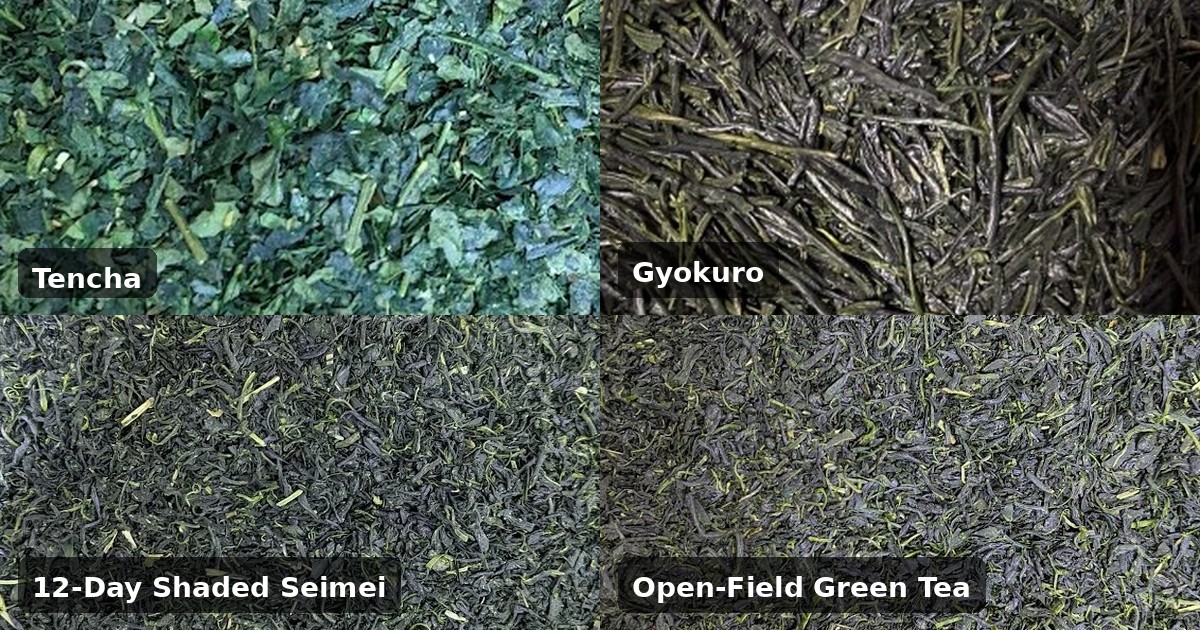
The following are actual tea samples handled and photographed by Sanrokuen. They are useful because the manufacturing differences are easier to understand when you can see the physical leaf rather than only read category names.
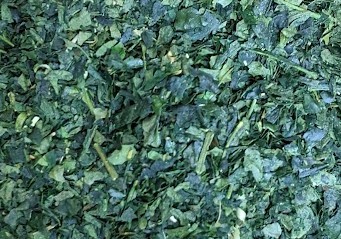
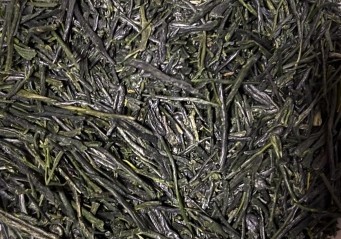
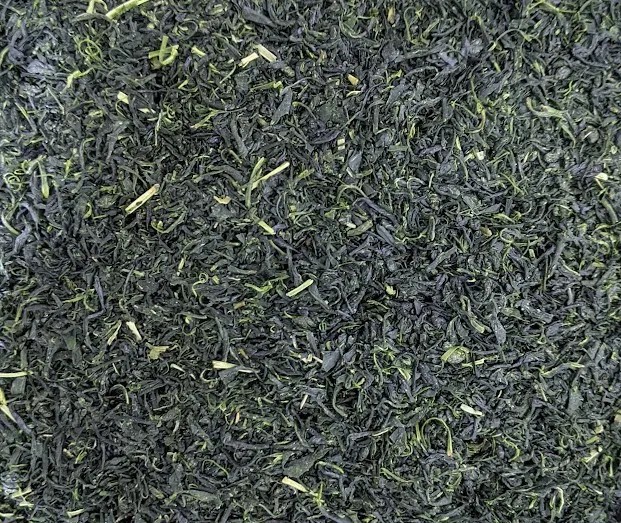
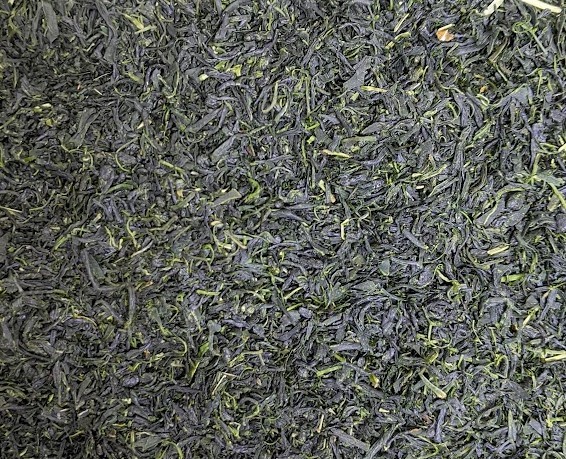
Note: Leaf appearance varies with cultivar, harvest, steaming, rolling, sorting and finishing. A photograph can illustrate manufacturing differences, but it cannot by itself prove chemical composition or commercial grade.
8. Sencha vs Kabusecha vs Gyokuro vs Tencha vs Matcha
| Tea | Pre-harvest light | After steaming | Typical leaf form | Typical sensory direction | How consumed |
|---|---|---|---|---|---|
| Sencha | Usually open field | Rolled and dried | Needle / twisted leaf | Fresh, brisk, green; more astringency possible | Infusion; leaves removed |
| Kabusecha | Shorter pre-harvest shading | Usually rolled and dried | Sencha-like rolled leaf | Balance of freshness, umami and mild covered aroma | Infusion; leaves removed |
| Gyokuro | Long / intensive shading | Rolled and dried | Fine dark needles | Strong umami, sweetness, rich covered aroma | Infusion; leaves removed |
| Tencha | Long / intensive shading | Dried without rolling; later refined | Thin flat flakes | Umami-rich, deep green, distinctive covered aroma | Usually milled rather than brewed as a normal leaf tea |
| Matcha | Inherited from tencha cultivation | Refined tencha finely milled | Fine powder | Concentrated tencha flavor, umami and covered aroma | Powder dispersed into water or food |
The Most Common Misunderstandings
- “Matcha is any powdered green tea.” No. Powdered sencha is powdered green tea; matcha is made from tencha.
- “Gyokuro is matcha before grinding.” No. Gyokuro is rolled; tencha is dried without rolling and then refined for matcha.
- “All shaded tea is gyokuro.” No. Shading duration and intensity vary, and processing matters.
- “Darker green always means higher quality.” No. Color is important, especially for matcha, but cultivar, aroma, taste, harvest and processing must also be considered.
- “Smooth taste means low caffeine.” Not necessarily. Strongly shaded teas can contain substantial caffeine.
9. Frequently Asked Questions
Is matcha just powdered green tea?
No. Authentic matcha is made by finely milling refined tencha. Powdering ordinary sencha produces powdered green tea, but the cultivation and processing are different.
Can gyokuro be ground into matcha?
You can physically grind gyokuro, but the powder is not produced through the traditional tencha-to-matcha manufacturing route. Gyokuro has already undergone intensive rolling.
Why is matcha often greener than sencha?
Strong pre-harvest shading tends to increase chlorophyll and other light-harvesting pigments. Cultivar, harvest timing, processing, storage and grinding also influence the final color.
Does shading always increase theanine?
Shading generally favors higher free-amino-acid and theanine levels relative to comparable sun-exposed shoots, but the final concentration varies with cultivar, season, fertilization and the exact shading regime.
What causes the special aroma of matcha and gyokuro?
Long shading creates the characteristic “covered aroma” known as ooi-ka. Dimethyl sulfide is one important contributor, together with several other aroma compounds formed from precursors affected by covered cultivation and processing.
Is kabusecha simply lower-grade gyokuro?
No. Kabusecha is better understood as its own style of covered green tea, usually with shorter shading and sencha-style processing. Quality can range from everyday to very high grade.
Conclusion: Matcha Starts in the Field, Not in the Grinder
The difference between matcha and ordinary green tea cannot be explained by grinding alone. It begins with light management before harvest. Shading alters amino acids, catechins, chlorophyll, caffeine and aroma precursors. Long-covered teas can develop the distinctive ooi-ka associated with gyokuro and tencha, while open-field teas retain a more typical fresh, brisk sencha character.
After harvest, processing creates the final branches: rolled shaded leaves become gyokuro, while unrolled dried leaves become tencha. Only after tencha is refined and finely milled does it become matcha.
Understanding this chain—sunlight → leaf chemistry → aroma → processing → tea type—is the clearest way to understand what makes Japanese matcha different.
References & Further Reading
- Ministry of Agriculture, Forestry and Fisheries of Japan (MAFF), “Uji Tea – Traditional Foods in Japan.” Description of traditional gyokuro shading and tencha processing.
- MAFF, “Traditional Authentic YAME GYOKURO.” Official description of Ooi-ka (“covered flavor/aroma”) produced by shaded cultivation.
- Haraguchi K. (2015), “Characteristics of Matcha.” Journal of Japan Association on Odor Environment. Discussion of covered cultivation, amino acids, carotenoids, dimethyl sulfide and ionone-related aroma.
- Chen X. et al. (2022), “Effect of Shading on the Morphological, Physiological, and Biochemical Characteristics of Tea Plants.” Study of strong shading and changes in chlorophyll, theanine, caffeine and tea polyphenols.
- Unno K. et al. (2025), “Stress-Relieving Effects of Japanese Green Tea.” Comparative component data for multiple Japanese green tea types, including gyokuro and sencha.
- Sakaida T. et al. (2010), Study on light exposure after removal of shading material in gyokuro cultivation. Reports changes in free amino acids, theanine, catechins and dimethyl sulfide with post-cover light exposure.
This article explains general production principles. Shading period, shading rate, chemical composition and sensory quality vary by cultivar, region, season and producer.